
Is Your Partner Cheating?
There is a weird little moment when your body seems to know before your brain does.
Maybe your partner turned their phone over again. Maybe a text message disappeared too fast. Maybe they are suddenly guarded about where they are going, who they are talking to, or why they are spending more time away.
You do not have proof. You just have a gut feeling.
That nagging feeling can make you feel crazy, especially when nothing looks obvious from the outside. Your partner is still there. You may still share a bed, bills, kids, pets, plans, or a whole life. But something feels off.
So now you are asking the question nobody wants to ask.
Is your partner cheating?
The answer is not always simple. Cheating does not always look like a hotel receipt or lipstick on a shirt anymore. Sometimes it looks like hidden text messages, deleted DMs, emotional distance, secret cash withdrawals, new phone habits, or a “just a friend” connection that feels too intense to ignore.
One strange moment does not prove cheating. But a pattern is worth paying attention to.
What Counts as Cheating Today?
Cheating used to sound more obvious. One partner had sex with another person. That was the line.
Now the line can be harder to name. For some couples, watching porn is not a big deal. For others, paying for custom content feels like betrayal. One relationship may be fine with flirting. Another may see secret DMs as a red flag.
That is why cheating is not only about the act. It is about the agreement.
If both people understand the rules and communicate honestly, the relationship has a stronger foundation. If one partner hides something because they know it would hurt the other person, that is different.
That is where boundaries in relationships matter. Cheating often starts where two people never clearly talked about porn, texting, exes, DMs, flirting, emotional intimacy, or private online behavior.
A healthy relationship needs honesty before it needs perfection. Ask yourself one simple question. Would your partner act the same way if you were standing next to them?
If the answer is no, that does not automatically mean infidelity. But it may mean something is being hidden.
The First Sign Is Usually a Pattern
The first sign is not always one shocking discovery. It is usually a pattern.
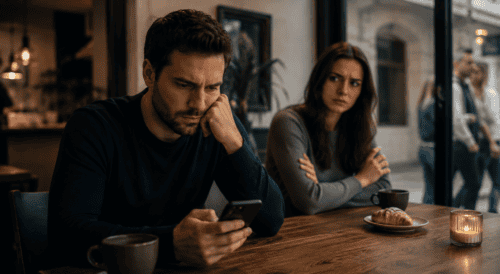
Your partner may become emotionally distant. They may stop sharing details about their day. They may seem irritated by normal questions. They may spend long periods away from their phone, then suddenly become glued to it again.
You may notice new clothes, a sudden increase in grooming, more attention to appearance, or unexplained changes in routine. None of that proves cheating by itself.
A new job can change someone’s habits. Stress can affect sex. Anxiety can make a person pull away. Depression can make someone seem cold. Money problems, family issues, and mental health struggles can all change a partner’s behavior.
Still, common signs become harder to ignore when they stack together.
They hide their cell phone. They delete text messages. They become defensive fast. They avoid physical intimacy. They show less interest in the relationship. They are suddenly unreachable. They spend money without explaining it. They accuse you of being insecure instead of answering your concerns.
A strong relationship can survive weird seasons, but it needs honesty. When healthy relationship habits start disappearing, trust issues can grow fast.
That is when the question shifts. It is no longer, “Did one odd thing happen?” It becomes, “Why does everything feel different now?”
When “Just a Friend” Starts Feeling Different
People need friends. That is normal.
Your partner should have their own life, their own support system, and their own conversations outside the relationship. You should not have to be suspicious of every friend, coworker, gym buddy, or person they laugh with.
But “just a friend” can start feeling different.
Maybe your partner talks about this person all the time, then suddenly stops. Maybe they share private thoughts with them but not with you. Maybe they light up around that person, then seem flat at home. Maybe they protect the friendship harder than they protect your feelings.
That can be an early sign of emotional cheating.
Emotional cheating does not always start with sex. It can start with attention, late-night texts, private jokes, emotional support, complaints about the relationship, or the thrill of being seen by someone new.
The problem is not friendship. The problem is secrecy.
If your partner is hiding the connection, deleting messages, minimizing your concerns, or making you feel guilty for noticing, that friendship may not be as harmless as they claim.
When one partner starts giving emotional closeness to someone else, the relationship can lose its center. That is why emotional intimacy matters so much. Without it, people can still live together and feel completely alone.
Emotional Cheating Can Hurt Like Physical Cheating
Emotional cheating can be brutal because it steals the private part of a relationship.
Sex matters. So does being chosen. So does being trusted. So does being the person your partner wants to tell things to first.
When that closeness moves somewhere else, you can feel it. Your partner may still come home, kiss you goodbye, and act like nothing obvious has happened. But emotionally, they are somewhere else.
That distance creates anxiety. You start paying attention to every shift in tone, every phone notification, every unexplained mood, and every moment they seem more alive with someone else than they do with you.
That does not make you crazy. It means something has changed.
The hard part is knowing whether your gut feeling is warning you or whether past pain is making you afraid. If you have been lied to before, your nervous system may look for signs everywhere.
A useful outside resource on emotional cheating explains how secrecy, crossed boundaries, and emotional closeness can damage trust even when there has not been physical sex.
That is the part people often misunderstand. The betrayal is not always the sex. Sometimes the betrayal is the hidden emotional life.
Phone Habits Can Become a Red Flag
A phone is not just a phone anymore.
It can hold text messages, dating apps, private photos, hidden folders, DMs, payment apps, browser history, fake accounts, and entire emotional relationships.
That is why phone habits matter.
A sudden change in phone behavior can be a warning sign, especially if it comes with defensiveness. Maybe your partner keeps their phone on them all the time. Maybe they changed their password. Maybe they sleep with it under the pillow. Maybe they take it into the bathroom for long periods.
Maybe the phone used to sit on the couch. Now it never leaves their hand.
Privacy is normal. Secrecy is different.
Privacy says, “I am allowed to have my own space.” Secrecy says, “I am hiding this because I know it would hurt you.”
You do not need to become a detective. You do not need to stalk, spy, or break into accounts. That usually creates more damage, even when your concerns are real.
Instead, find a calm moment and name what you have observed.
Try this: “I am not accusing you, but I have noticed your phone habits changed. You seem more protective of it, and it is making me feel uneasy. Can we talk about it?”
The answer matters. A partner who wants to rebuild trust may not love the conversation, but they will try to understand why you feel hurt. A cheating partner may attack, deflect, mock, blame, or turn the whole thing into your insecurity.
When trust gets tangled with private messages and digital behavior, better communication skills for couples can help keep the talk from becoming a screaming match.
Digital Cheating Is Where Things Get Messy
Digital cheating is one of the biggest gray areas in modern relationships.
Is texting cheating? Is flirting in DMs cheating? Is watching porn cheating? Is paying for OnlyFans cheating? Is AI chatting cheating? Is hiding a Reddit account cheating? Is saving another person’s photos cheating?
The answer depends on the relationship, but secrecy changes everything.
Digital cheating can include secret text messages, hidden social media accounts, flirty DMs, paid sexting, dating apps, private Snapchat streaks, custom adult content, emotional AI chats, or late-night conversations with someone your partner would not want you to know about.
It can also include a contact saved under a fake name. That one usually says plenty.
Not every online conversation is cheating. Most people have friends, private thoughts, fantasies, and digital lives. But when the behavior becomes sexual, emotionally intense, hidden, or dishonest, it can cross a line.
The digital world has made intimacy easier to access and easier to hide. That is why conversations about virtual sex need honesty before they become a problem.
Technology is not the enemy. Lying is.
Is Watching Porn Cheating?
Watching porn is not automatically cheating in every relationship.
Some couples do not care. Some watch it together. Some see it as a private fantasy. Some consider it completely separate from the relationship.
Other people feel hurt by it.
The issue is not whether every couple should have the same rule. They should not. The issue is whether both people know the rule.
Porn can become a problem when it is hidden, compulsive, interactive, paid for in secret, or replaces physical intimacy. It can also hurt when one partner feels compared, unwanted, or ignored while the other keeps pretending nothing is happening.
If your sex life has changed and porn is part of the picture, the conversation needs care.
Do not start with shame. Start with honesty.
You might say, “I am not trying to control you. I need to understand what role porn has in your life and whether it is affecting our sex life.”
There is a big difference between private fantasy and secret behavior that damages trust.
If porn, masturbation, or solo sexual activity has become tense between you, talking about how to masturbate with your partner can sometimes make the subject less shame-filled and more honest.
The goal is not to police desire. The goal is to stop lying from becoming part of your sex life.

Is OnlyFans Cheating?
OnlyFans can feel different from regular porn because it may be personal.
There can be messages, tips, custom requests, private content, a creator who responds directly, and money spent in secret. That can make it feel less like watching and more like participating.
For some people, that is cheating. For others, it depends on the agreement.
The concern gets stronger when there are hidden charges, secret accounts, deleted emails, cash withdrawals, private messages, or sexual spending that one partner worked hard to hide.
Money can become one of the tell tale signs.
Unfamiliar charges, sudden spending, payment apps, or unexplained expenses may not prove cheating. But they can point to behavior your partner does not want you to see.
This is not only about sex. It is about truth.
If one partner is using money to access sexual attention while hiding it from the relationship, that is a big deal. It can damage trust even if nothing physical happened.
A direct question may be uncomfortable, but it is better than silently spiraling. Try asking, “Is there anything sexual, emotional, or financial that you have been hiding from me?”
This is also where clear sexual communication matters outside the bedroom. People need to know what counts as betrayal before they are already wounded by it.
Changes in Your Sex Life Can Be a Warning Sign
A changing sex life does not always mean cheating.
Every relationship has slow seasons. Stress, grief, aging, medication, hormones, mental health, body image, resentment, and exhaustion can all affect sexual activity.
Still, a sudden change in sex can be a warning sign when it appears with other signs.
Sometimes a cheating partner shows less interest at home because their desire is going somewhere else. Sometimes they suddenly want more sex because of guilt, excitement, comparison, or the sexual charge of possible infidelity.
A sudden increase can feel just as strange as a sudden drop.
Pay attention to the whole picture. Is your partner avoiding physical intimacy? Are they more critical? Are they trying new things without wanting to talk about where the interest came from? Do they seem disconnected during sex? Do they pull away from affection but act energized elsewhere?
Sex is not only sex. It carries trust, anger, softness, safety, rejection, confidence, and emotional closeness. When something shifts, both people usually feel it.
The conversation does not need to start with accusation. It can start with, “I feel like our sex life has changed, and I do not understand why. I want to talk about it without blaming each other.”
If both people are still invested, honest communication of desires can help uncover whether the issue is stress, boredom, hurt, attraction, secrecy, or something neither person has said out loud yet.
Money, New Clothes, and Sudden Routine Changes
Some cheating signs are less romantic and more practical.
New clothes are not proof. A new haircut is not proof. Wanting to feel attractive is not wrong. A new job, new gym routine, or new hobby can be healthy.
But sudden changes deserve attention when they come with secrecy.
Maybe your partner starts dressing up for tiny errands. Maybe they care more about appearance but show less interest in you. Maybe they are suddenly gone for long periods. Maybe they are unreachable during times they used to answer.
Maybe money starts looking strange.
Unexplained spending, cash withdrawals, restaurant charges, rideshare receipts, hotel holds, gifts, or random purchases can raise concerns. A person may have a normal explanation. Or they may not.
The key is to focus on what you know.
Not, “You are obviously cheating.” Instead, try, “I noticed more unexplained spending and more time when I cannot reach you. I need to understand what is happening.”
That keeps the conversation grounded.
A stable relationship makes room for both independence and togetherness. When routine changes start damaging trust, the balance between independence and togetherness may need a serious reset.
Gut Feeling or Anxiety?
A gut feeling can be powerful.
Many people know something is wrong before they can prove it. They notice tone, timing, distance, avoidance, anger, silence, and small changes in behavior. The body picks up patterns before the mind can explain them.
But anxiety can feel like intuition too.
If you have been cheated on before, lied to, abandoned, or gaslit, your brain may work overtime to protect you. A late reply can feel like betrayal. A quiet mood can feel like proof. A normal need for privacy can feel like a threat.
That does not mean your concerns are fake. It means they need sorting.
Ask yourself what you have actually observed. Is this a repeated pattern? Has your partner lied before? Are you reacting to this relationship or an old wound? Can you explain your concern without attacking?
You do not need to ignore your instincts. You also do not need to treat every fear as a fact.
Clarity usually comes from patterns, calm communication, and time.
If you cannot tell the difference between intuition and anxiety, talking with mental health professionals can help. A couples therapist can also help when both people want to repair the relationship but keep getting stuck in anger, guilt, or blame.
A healthier sexual wellness conversation includes the mind, not just the body.
How to Talk About It Without Blowing Up
If you suspect cheating, your first instinct may be to explode.
That is understandable. But if you want the truth, timing matters.
Do not start the conversation when one of you is half asleep, drunk, rushing to work, or already furious. Choose a private calm moment where both of you have time to talk without interruptions.
Start with observations, not a courtroom speech. Say what changed. Say how it made you feel. Ask directly. Then stop talking long enough to hear the answer.
You might say, “I have felt distance between us, and I have noticed changes in your phone habits. I am scared there is something I do not know. I need you to be honest with me.”
Or, “I am not trying to attack you. I need to talk about what I have been feeling before it turns into resentment.”
Pay attention to the response. A caring partner may be defensive at first, but they should still care about your feelings. A cheating partner may show anger, blame, contempt, or fake confusion. They may make you feel guilty for asking the question at all.
Do not let the conversation become only about your tone. The issue is the behavior.
Good conflict talks require honesty, timing, and listening. That is why communication skills for couples matter most when the subject is painful.

What If They Admit It?
If your partner admits cheating, your whole body may go into shock.
You may feel anger, grief, anxiety, disgust, numbness, sadness, panic, or a strange need to know every detail. You may want to leave immediately. You may want to cling to them. You may feel both in the same hour.
That is normal.
Infidelity can trigger grief because something real has been broken. Even if the relationship continues, the old version of trust is gone.
Do not rush yourself into forgiveness. Do not let your partner rush you either.
Repair takes more than saying sorry. It usually requires full honesty, no more contact with the affair partner, clear boundaries, transparency, accountability, and time. It also requires the cheating partner to tolerate your pain without making themselves the victim.
Own guilt is not the same as repair. A person can feel guilty and still avoid the truth. A person can cry and still hide details. A person can say they love you and still resist doing the hard work.
Some couples do recover. Therapy can be an invaluable tool for couples trying to make sense of their feelings and decide the future of the relationship.
If sex becomes part of the repair process later, it should not be forced. Rebuilding physical intimacy after betrayal takes emotional safety first.
What If They Deny Everything?
A denial does not automatically mean they are lying. It also does not automatically mean you are wrong.
This is where you return to patterns.
If your partner answers clearly, shows concern, explains the behavior, and becomes more open afterward, the relationship may have room to settle. Maybe there was stress. Maybe there was anxiety. Maybe there was a misunderstanding.
But if they deny everything while the behavior continues, that is different.
If they keep hiding the phone, deleting messages, disappearing for long periods, changing stories, spending money strangely, and making you feel foolish for noticing, the denial does not fix the problem.
Truth is not only in words. It is in behavior.
You do not need a confession to decide a relationship is hurting you. You do not need perfect proof to say, “I cannot live with this level of secrecy.”
A partner who wants the relationship to work should care about restoring trust, even if they did not cheat. They should want you to feel safe. They should want the relationship to feel honest again.
If they refuse every conversation, mock your concerns, or use anger to shut you down, the problem is bigger than one accusation.
Strong healthy relationship dynamics depend on respect, not just technical innocence.
Rebuilding Trust Takes More Than Promises
Rebuilding trust is slow.
It cannot be fixed with one apology, one date night, or one emotional conversation at 2 a.m.
If there was cheating, the unfaithful partner has to be willing to live differently. That may mean answering questions, ending hidden contact, being transparent about phone habits, explaining money issues, and accepting that trust will not return on command.
The hurt partner also has work to do, but not the same work. They need support. They need space to feel anger and grief. They need to decide what they actually need, not what they think they are supposed to accept.
Couples therapy can help because a neutral person can slow the conversation down. A couples therapist can help both people talk about betrayal, guilt, sex, boundaries, future plans, and whether staying together is actually healthy.
Not every relationship should be saved. Some can be repaired. Some cannot.
The point is not to pretend betrayal did not happen. The point is to find out whether both people are willing to build something more honest than what existed before.
That repair often requires more than sex. It requires emotional safety, consistency, patience, and a new level of truth. When both partners are ready, learning how to rebuild intimacy can become part of the work.

The Real Question Is Not Always “Are They Cheating?”
“Is your partner cheating?” is the question that brings people here.
But sometimes the deeper question is different.
Can I trust this person? Do they care when I am hurting? Are they honest when the truth is uncomfortable? Do we have the same boundaries? Are they emotionally present? Do I feel safe in this relationship?
Cheating is not only about sex. It is about trust, attention, honesty, and the private agreements that hold a relationship together.
A partner can be technically faithful and still make you feel alone. A partner can avoid physical cheating but still hide, flirt, lie, and emotionally disappear. A partner can also act strange because they are depressed, stressed, ashamed, or struggling in ways they have not named yet.
That is why clarity matters.
Look at the patterns. Find a calm moment. Say what you have noticed. Ask direct questions. Listen to the answer, but watch the behavior after the answer too.
The truth usually shows up there.
If the relationship is still worth saving, honesty has to come before desire. Trust has to come before touch. And when both people are ready to reconnect sexually with more care, curiosity, and intention, Jack and Jill Adult have couples toys, lubricants, massage oils, bedroom games, and intimacy products that can help make that next step feel less awkward and more connected.

I am a creative digital marketer and brand strategist with nearly two decades of hands-on experience helping businesses grow online. Based in Sugarloaf, California, I have worked across everything from rebranding retail stores to boosting e-commerce performance with smart SEO and a strong visual identity. My background is grounded in design, photography, and content marketing to build brands that actually connect with people. I am all about practical strategies, clean design, and ensuring the message matches the mission, on screen and in print.