
Pelvic Floor Health For Men
Pelvic floor health matters for men, even though it is rarely discussed. The pelvic floor is a group of muscles and connective tissue that sit at the base of the pelvis. These muscles support the bladder, bowel, and pelvic organs. The male pelvic floor muscles are located between the pubic bone and the tailbone, and play a crucial role in supporting pelvic organs, maintaining continence, and contributing to sexual health. They also play a direct role in bladder control, bowel control, and sexual function.
When the pelvic floor muscles work well, they contract and relax at the right times. When they do not, men may experience urinary incontinence, pelvic pain, sexual performance issues, or bowel problems. Pelvic floor health can directly affect sexual function in men, as strong and well-coordinated pelvic floor muscles can improve erectile function and ejaculation control, while dysfunction may contribute to sexual difficulties. Pelvic floor dysfunction in men is common, underdiagnosed, and highly treatable.
Understanding how the male pelvic floor works is the first step toward improving pelvic health and overall well being. Pelvic floor dysfunction is often underreported among men due to reluctance to discuss personal health issues.
What Is the Male Pelvic Floor
The male pelvic floor is made up of several muscles, including the levator ani group, that stretch from the pubic bone to the tailbone. These pelvic floor muscles support the bladder, rectum, and prostate. These muscle groups, often referred to as pelvic muscles, play a crucial role in bladder and bowel control, support of pelvic organs, and sexual function. They also assist with urine flow, bowel movement control, and sexual health.
The pelvic floor muscles must be strong enough to support pelvic organs, but relaxed enough to allow urination, bowel movements, and ejaculation. These muscles work in conjunction with peripheral nerves to control urination, ejaculation, and other pelvic functions. Problems arise when these muscles are weakened or overly tense.
Pelvic floor health depends on balance, not just strength.
Pelvic Floor Dysfunction In Men
Pelvic floor dysfunction occurs when the pelvic floor muscles do not contract, relax, or coordinate properly. This condition can affect men of all ages and is often overlooked or misdiagnosed.
Common pelvic floor dysfunction symptoms include:
- Urinary urgency or frequent need to urinate
- Urinary incontinence or urine leakage
- Difficulty starting or stopping urine flow
- Overactive bladder symptoms
- Pelvic pain or pressure in the pelvic region
- Pain during sitting or after ejaculation
- Bowel movement difficulty or constipation
- Fecal incontinence or poor bowel control
- Erectile dysfunction or reduced sexual function
Pelvic floor problems may worsen over time if left untreated. Many men delay seeking care due to embarrassment or lack of awareness.
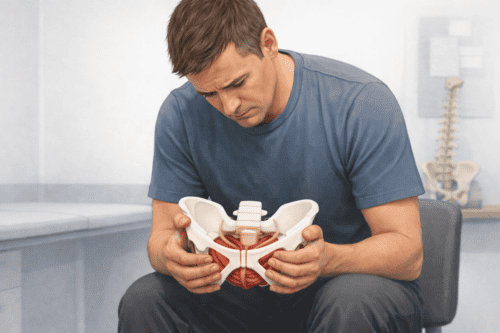
Symptoms Of Pelvic Floor Dysfunction In Men
Pelvic floor dysfunction in men can show up in many ways, often disrupting daily life and overall well being. Recognizing the signs early is key to getting the right treatment and improving pelvic floor health.
Common symptoms of pelvic floor dysfunction in men include:
- Urinary Incontinence: Experiencing urine leakage or loss of bladder control, especially during activities like coughing, sneezing, or heavy lifting, can signal weakened pelvic floor muscles.
- Urinary Urgency and Frequency: A frequent or sudden need to urinate, sometimes disrupting sleep or daily activities, may indicate issues with the pelvic floor muscles and bladder control.
- Pelvic Pain: Persistent or intermittent pain in the pelvic region, which may worsen with certain movements or positions, is a common sign of pelvic floor dysfunction.
- Erectile Dysfunction: Difficulty achieving or maintaining an erection can be linked to pelvic floor muscle problems, as these muscles play a crucial role in sexual function.
- Constipation or Fecal Incontinence: Trouble with bowel movements, such as constipation or involuntary loss of stool, can result from pelvic floor muscle dysfunction.
- Painful Bowel Movements: Straining or experiencing pain during bowel movements may be a sign that the pelvic floor muscles are not working properly.
- Discomfort or Pain During Sex: Pain or discomfort during sexual activity can occur if the pelvic floor muscles are overly tense or weakened.
These symptoms can develop due to a range of factors, including weakened pelvic floor muscles, musculoskeletal issues, chronic coughing, heavy lifting, or previous prostate surgery. If you notice any of these symptoms, it’s important to consult a healthcare provider. Early diagnosis and a personalized treatment plan—often including pelvic floor physical therapy and targeted exercises like Kegel exercises—can help restore pelvic floor strength, improve bladder and bowel control, and enhance overall quality of life.
Weak vs Overly Tense Pelvic Floor Muscles
Pelvic floor dysfunction is not always caused by weakness. In many cases, the pelvic floor muscles are overly tense.
A weakened pelvic floor may result in bladder or bowel problems, poor bladder control, or urine leakage during coughing, lifting, or physical activity.
An overly tense pelvic floor may cause pelvic pain, urinary urgency, incomplete emptying of the bladder or rectum, and pain that affects sexual performance.
Both conditions can exist at the same time. That is why pelvic floor therapy must be tailored to the individual.
Causes Of Pelvic Floor Problems In Men
Several factors can contribute to pelvic floor dysfunction:
- Aging and natural muscle loss
- Radical prostatectomy or prostate surgery
- Pelvic surgery or injury
- Chronic coughing or persistent coughing
- Heavy lifting without proper muscle support
- Constipation and straining during bowel movements
- Prolonged sitting and poor posture
- Musculoskeletal issues affecting the pelvis
- Nervous system or peripheral nerve disruption
- Stress and chronic muscle tension
After prostate surgery, pelvic floor weakness is especially common and often leads to urinary incontinence. Early pelvic floor physical therapy can significantly improve outcomes. There are various treatment options available for men experiencing pelvic floor problems, and awareness of these options can encourage seeking professional help.
Why Pelvic Floor Health Is Important
Pelvic floor health affects daily life more than most men realize.
Healthy pelvic floor muscles help:
- Improve bladder control
- Support bowel control
- Reduce pelvic pain
- Improve sexual function
- Support erectile function
- Maintain pelvic organ support
- Protect long-term pelvic health
Keeping the pelvic floor muscles strong reduces the risk of urinary leakage, erectile dysfunction, and pelvic pain. When pelvic floor muscles are strong and flexible, men experience better confidence, comfort, and sexual health.
Pelvic Floor Exercises For Men
Pelvic floor muscle training, including exercises such as Kegel exercises, is essential for maintaining and improving pelvic floor health for men. This training focuses on strengthening and enhancing control of the pelvic floor muscles.
Exercises like Kegels can aid in recovery after prostate surgery by restoring bladder control.
These exercises involve muscle contractions that lift and engage the pelvic floor. When done correctly, they can improve bladder control, reduce urinary urgency, and support sexual performance.
Pelvic floor muscle exercises should be tailored and monitored for effectiveness, and men can perform these exercises almost anywhere and at any time.
Finding The Correct Muscles
To identify the right muscles, imagine stopping urine flow or preventing passing gas. The muscles used in these actions are the pelvic floor muscles.
The abdomen, buttocks, and thighs should stay relaxed. Only the pelvic floor should engage.
How To Perform Pelvic Floor Muscle Exercises
- Contract the pelvic floor muscles gently
- Hold the contraction for 3 to 5 seconds
- Relax fully for the same amount of time
- Repeat 10 times
- Perform 2 to 3 sets daily
Breathing should remain steady. Avoid holding your breath during muscle contractions.
Consistency matters more than intensity. Benefits often appear within a few months.
When Kegel Exercises Are Not Enough
Kegel exercises are not appropriate for all men. Those with overly tense pelvic floor muscles may experience worsening pelvic pain if they focus only on strengthening.
In these cases, relaxation techniques, diaphragmatic breathing, and pelvic floor physical therapy are essential.
Pelvic Floor Physical Therapy For Men
Pelvic floor physical therapy, also known as pelvic therapy, is a specialized form of physical therapy focused on the pelvic region. A pelvic floor therapist is a healthcare professional trained to assess, diagnose, and treat pelvic floor issues in men, such as pelvic pain, urinary problems, and incontinence. Their expertise is crucial in improving pelvic health and providing tailored treatment options.
A pelvic floor physical therapist may help men:
- Identify the correct muscles
- Improve muscle coordination
- Increase pelvic floor strength
- Reduce excessive muscle tension
- Improve bladder and bowel control
- Address pelvic pain
- Restore sexual function
Pelvic floor therapy may include guided exercises, manual therapy, biofeedback, posture correction, and education.
A personalized treatment plan is essential for long-term improvement. Men experiencing pelvic floor issues should consult a healthcare provider for a proper diagnosis and treatment plan.

Biofeedback And Therapy Tools
Biofeedback therapy uses sensors to show how pelvic floor muscles work during exercises. This helps ensure proper muscle engagement and reduces compensation from other muscles.
Some men benefit from additional techniques such as relaxation training, stretching, or point injections for chronic pelvic pain when recommended by a healthcare professional.
Daily Habits That Support Pelvic Health
Simple lifestyle changes can improve pelvic floor health:
- Maintain bowel regularity
- Avoid chronic constipation
- Manage coughing conditions
- Avoid excessive straining
- Use proper lifting techniques
- Reduce prolonged sitting
- Stay physically active
- Maintain a healthy weight
Pelvic health is influenced by daily routine, not just exercise sessions.
When To See A Healthcare Provider
Men should consult a healthcare provider if symptoms persist or worsen. Early evaluation helps rule out other conditions and ensures the correct treatment approach.
Pelvic floor dysfunction is treatable. Ignoring symptoms often leads to longer recovery time.
Pelvic floor health for men is essential for bladder control, bowel function, and sexual health. Pelvic floor dysfunction is common, but it is not something men must accept as normal.
With proper exercises, pelvic floor physical therapy, and supportive daily habits, most men experience meaningful improvement within a few months.
Pelvic health is part of overall well being. Taking care of it leads to better comfort, confidence, and quality of life.

I am a creative digital marketer and brand strategist with nearly two decades of hands-on experience helping businesses grow online. Based in Sugarloaf, California, I have worked across everything from rebranding retail stores to boosting e-commerce performance with smart SEO and a strong visual identity. My background is grounded in design, photography, and content marketing to build brands that actually connect with people. I am all about practical strategies, clean design, and ensuring the message matches the mission, on screen and in print.