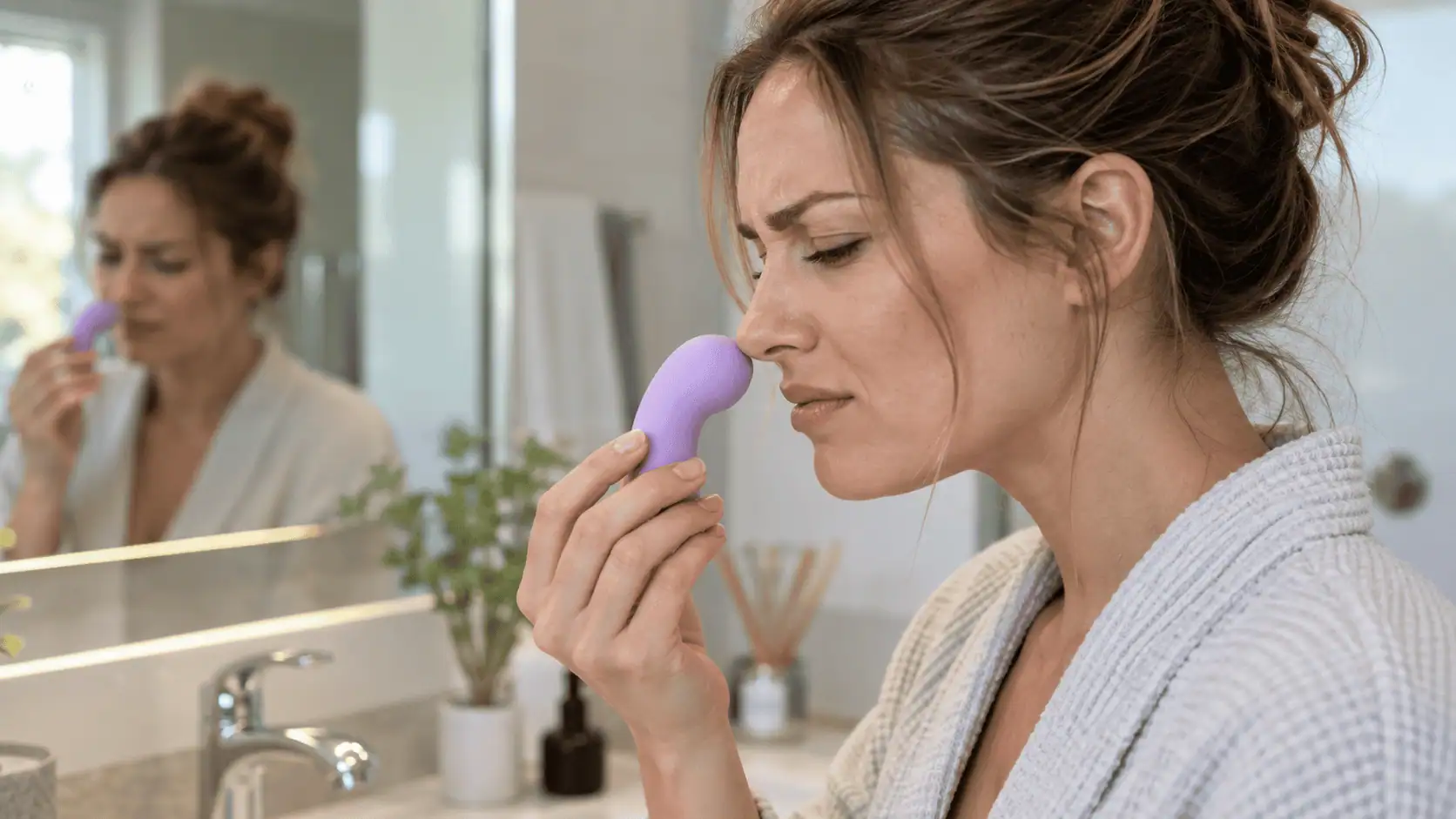
Why Does My Sex Toy Smell Weird?
You pull your favorite toy out of the drawer, bring it anywhere near your face, and immediately think, why does my sex toy smell weird?
In most cases, a sex toy smells weird because of its material, trapped moisture, bacteria, leftover manufacturing chemicals, or simple material breakdown over time. Nonporous toys usually do not hold odor for long, while porous materials can trap bodily fluids and smells even after washing.
Maybe it has a faint plastic smell or myaybe your new toy has a surprisingly strong chemical odor straight out of the package. Maybe a butt plug still smells suspiciously like ass even though you washed it. Or perhaps a toy you’ve owned for years suddenly has a musty smell that definitely wasn’t there before.
If you use sex toys and want to know whether that odor is normal, fixable, or a sign the toy is no longer safe, this guide will help you sort it out. A sex toy smell can tell you quite a bit about what is happening with the toy, and that matters for hygiene, comfort, and avoiding irritation or infection.
Before you spray it with perfume, soak it in something questionable, or decide your nose is being dramatic, figure out what the toy is made from and where that smell may be coming from. From there, we’ll look at material types, chemical, musty, and fecal odors, how to clean and dry toys properly, safer lube choices, and when a toy needs to be replaced.
First, What Is Your Sex Toy Made From?
The material is one of the most important things to know about any sex toy. It affects how the toy feels, what kind of lube you can use, how you clean it, how long it lasts, and whether odors can become trapped inside the material.
Nonporous sex toy materials generally include quality silicone, ABS plastic, stainless steel, and suitable glass such as borosilicate glass. These materials do not readily absorb fluids into their surfaces and are therefore much easier to clean thoroughly.
Softer materials such as TPE, TPR, jelly rubber, PVC, and some elastomers can be porous or semi-porous. Tiny spaces within the material can retain bodily fluids, lube, soap residue, moisture, and microorganisms in ways a solid glass or metal surface generally does not.
Planned Parenthood recommends nonporous materials such as 100% silicone, hard plastic, stainless steel, aluminum, and break-resistant glass for toys that are inserted into the body because these materials do not absorb germs and are easier to keep clean.
That difference becomes extremely important when something starts smelling funky.
Why Does My New Sex Toy Smell Like Chemicals?
A new sex toy can sometimes have a mild smell when you first open the package, and the material affects how easily it cleans up, how much odor it retains, and its overall safety. Manufacturing, packaging, dyes, adhesives, plastic components, and the material itself can all contribute to a temporary new-product odor.
A slight smell that disappears after a good wash and some time in the open air is not necessarily cause for alarm. Some TPE toys, strokers, rubbery materials, and inexpensive flexible plastics naturally have more odor than glass, metal, ABS plastic, or high-quality silicone, with body-safe silicone being one of the most common non-porous options.
A strong chemical smell that won’t disappear, however, deserves more attention.
Soft toys sold as jelly rubber, PVC, or vaguely described “rubber” materials may contain plasticizers and other compounds that give the material its flexibility. Jelly rubber toys often contain phthalates, which are harmful. Depending on the formulation, these materials can off-gas and smell strongly of chemicals when new, even if they seem fine at first.
If you wash the toy according to its instructions, let it air-dry completely, and it still smells like a tire factory every time you open the drawer, you don’t have to keep putting it inside your body just because you paid for it.
The sex toy industry has improved tremendously over the years, and shoppers have far more high-quality material choices than they once did. Planned Parenthood generally recommends body-safe materials for inserted toys, especially non-porous materials. A persistent, unpleasant chemical smell is a perfectly reasonable reason to choose something made from a non-porous material you feel more comfortable using.

Should Silicone Sex Toys Smell?
High-quality silicone should be essentially odorless.
That does not mean every object marketed with the word “silicone” will have absolutely no smell. A toy can contain other components, coatings, dyes, lubricants left over from manufacturing, adhesives, or mixed materials.
However, a quality silicone toy should not normally develop a powerful chemical smell simply because the silicone itself is sitting in your drawer.
Silicone is popular in the sex toy industry partly because it can combine flexibility and softness with a nonporous surface.
One thing to remember is that silicone-based lube and silicone toys don’t always play nicely together. Some silicone lubricants may damage certain silicone toy surfaces, so check the manufacturer’s instructions or stick with water-based lube when you’re unsure. Our guide to choosing the right lubricant explains how different lubes interact with silicone, jelly, TPE, glass, metal, and other sex toy materials.
If a formerly smooth silicone toy becomes gummy, tacky, cracked, swollen, or starts developing a new odor, something has changed. Stop using it until you determine whether the surface has been damaged.
Why Does My Butt Plug Smell Like Poop?
We’ll just say it: if you put something in your ass, there is always a possibility that it will come out smelling like ass.
That does not automatically mean the butt plug is dirty forever. A nonporous silicone, glass, or metal anal toy can usually be cleaned according to the manufacturer’s directions and returned to a clean, neutral-smelling state.
Porous anal toys are another matter.
TPE, jelly rubber, TPR, and similar flexible materials can retain odor more easily because substances can become trapped within the material instead of remaining only on the surface. That is particularly relevant during anal play, where fecal bacteria are part of the equation whether you visibly see poop or not.
If you’ve thoroughly washed an anal toy and the poop smell keeps returning once the toy dries, take that seriously. Your nose may be telling you that something has been absorbed into the material that you’re no longer able to remove completely.
When choosing a butt plug for regular or longer wear, material matters for both comfort and care. Silicone is often a useful option because it provides flexibility while still offering a nonporous surface when the toy is made from quality silicone.
And regardless of material, anal toys need a properly flared base. Smell is annoying. A toy disappearing into your rectum is an emergency-room problem.
Porous Toys Hold Onto More Than Smells
Imagine the surface of a glass dildo. It is hard, smooth, and nonporous. Once properly washed, bodily fluids have few places to hide.
Now compare that with a soft TPE stroker. The material may feel amazing precisely because it is flexible, squishy, and skin-like, but those same material characteristics can make cleaning and drying more difficult.
Jack and Jill Adult’s guide to strokers and masturbators explains that many realistic masturbator materials are porous and require thorough washing and complete drying between uses.
This does not mean every TPE toy immediately becomes unsafe after one orgasm. It means you need to understand what you’re buying and care for it accordingly.
Using a condom over a porous penetrative toy can also create an additional barrier between the toy and bodily fluids. Planned Parenthood specifically recommends condoms as one way to reduce germ exposure when using toys made from potentially porous materials.
Why Does My Sex Toy Smell Musty?
A musty smell is different from that new-plastic smell.
If a previously clean toy suddenly smells like a damp towel, old basement, or gym bag, moisture may have been trapped during storage. Toys should be completely dry before you put them away.
Washing a toy and immediately sealing it inside an airtight plastic bag while it is still damp can create exactly the environment you don’t want: moisture with almost no airflow.
The better routine is simple. Wash the toy according to its manufacturer’s instructions, rinse away any remaining soap, and let it air dry completely before storage.
That final step matters more than people think.
You can do an excellent job washing a vibrator and then ruin your efforts by putting it away wet.
A breathable toy pouch or properly ventilated storage setup can be helpful depending on the product. You should also store different soft toys separately when manufacturers recommend it because certain materials can react when left touching each other for long periods.

How Should I Wash a Smelly Sex Toy?
For many waterproof, nonporous toys, warm water and mild soap are a good starting point. Use enough soap to clean the entire surface, pay attention to textured areas and seams, rinse thoroughly, and allow the toy to air dry.
Clean toys before and after use, and let them dry completely before storing.
However, the same cleaning rules do not apply to every sex toy.
A glass dildo and an electronic vibrator may both be nonporous, but you obviously should not treat their electronics the same way. Never submerge a splashproof vibrator just because the silicone on the outside can handle water.
Always check whether the toy is waterproof, water-resistant, or neither.
If a toy cannot go under running water, use the cleaning method recommended by its manufacturer. That may involve a damp cloth, toy cleaner, or carefully cleaning the usable surface while keeping water away from the motor, battery compartment, charging port, or controls.
Can I Boil Silicone Sex Toys?
Some solid, non-motorized silicone toys can tolerate boiling, but don’t automatically toss every silicone toy you own into a pot.
A dildo made entirely from silicone is very different from a silicone vibrator containing a motor, battery, charging hardware, or glued components. The manufacturer’s care instructions should always win.
The same principle applies to some stainless steel and glass toys. Materials that tolerate high temperatures may still be part of a product containing components that do not.
Certain non-vibrating silicone, steel, and glass components can sometimes tolerate more intensive sanitizing methods, but the exact cleaning procedure depends on the specific product.
When you’re unsure, mild soap and warm water according to the manufacturer’s instructions are much safer than turning your sex toy collection into a cookware experiment.
Can Vinegar Get Rid of Sex Toy Smell?
White vinegar and baking soda appear constantly in internet cleaning advice, but “natural” does not automatically mean suitable for every sex toy material.
Vinegar may be tolerated by some hard, nonporous materials, but it can damage or alter other surfaces, coatings, adhesives, finishes, or electronic components. Baking soda is mildly abrasive and may not be appropriate for every toy either.
More importantly, deodorizing something is not the same thing as making it hygienically clean.
If a porous toy has absorbed odor deep into its material, covering or neutralizing the smell does not magically turn it into a nonporous toy. You may simply be masking the warning your nose was giving you.
Follow the manufacturer-approved cleaning method first. If a toy still smells bad after being properly cleaned and thoroughly dried, replacement may be the smarter move.
Don’t Drown It in Soap Either
More soap does not always mean more clean.
Using a heavily perfumed liquid soap can leave fragrance and residue on a toy, particularly a porous one. That residue may irritate sensitive tissue later, and the perfume can make it harder to tell whether the original odor is actually gone.
A mild, unscented soap is generally the simpler choice when soap is appropriate for the toy.
Rinse thoroughly. If you can still feel slippery soap on the surface, you’re not finished rinsing.
The goal is a clean toy, not a butt plug that smells like lavender hand wash for the next six months.
TPE Strokers Need Extra Attention
TPE toys deserve their own discussion because the material is extremely common in penis strokers and realistic-feeling toys.
Thermoplastic elastomer can create a soft, flexible surface that feels very different from firmer silicone. That softness is one reason TPE strokers remain popular, but the material usually requires more careful cleaning and drying than a hard nonporous toy.
The interior of a stroker is particularly easy to leave damp. All those ribs, bumps, chambers, and textures that feel great during sex also make perfect little hiding places for water.
Wash the toy according to the manufacturer’s instructions and make absolutely sure the inside has dried before putting it away.
Some manufacturers recommend a renewal powder for certain soft materials after washing and drying. Follow the instructions for your specific toy rather than randomly dumping cornstarch, baking soda, or powder inside anything soft and calling it maintenance.
What If My Toy Smells Like Lube?
Sometimes the mystery smell isn’t mysterious at all.
Lubricant can leave residue behind, particularly if you’re using a thick anal lube, oil-based formula, flavored product, or something containing fragrance.
Porous materials may hold onto those smells much more stubbornly than glass or metal.
Your lube choice can also affect the toy itself. Water-based lubricant is generally the safest all-around choice for toy compatibility, while oils and silicone-based formulas may not suit certain materials. You can read the full breakdown in our Lube 101 guide.
If you’re using toys during anal play, lubrication is especially important because the anus does not self-lubricate.
When Is Sex Toy Smell a Red Flag?
Your nose is actually useful here.
A faint smell from a brand-new soft toy that disappears after washing is one thing. A powerful odor that persists, gets worse, or suddenly appears after months of use is something else.
Pay particular attention if the smell is accompanied by physical changes. If a toy has become sticky, cracked, slimy, discolored, swollen, brittle, peeling, or oddly soft, the material may be degrading.
A persistent musty smell after cleaning and drying is also a reason for concern. The same goes for a porous anal toy that continues to smell like fecal matter after a thorough wash.
At some point, the correct cleaning technique becomes buy a new toy.
Sex toys are not family heirlooms. You do not get extra points for keeping the same $25 jelly dildo alive through three presidential administrations.
When Should I Replace a Smelly Sex Toy?
Replace it when you can no longer confidently get it clean.
That threshold may arrive sooner with porous materials than with quality silicone, glass, metal, or ABS plastic.
If a jelly toy develops an increasingly strong chemical odor, a TPE toy retains unpleasant smells after cleaning, or any toy begins showing obvious material degradation, replacement is inexpensive compared with repeatedly putting a questionable surface against sensitive tissue.
A toy that smells bad even after a good wash and complete drying is telling you something.
Listen to it.
For a hard nonporous toy, an unexplained persistent odor may warrant checking seams, battery compartments, charging ports, or other areas where moisture or residue could be hiding. If the toy contains electronics and smells burnt, hot, or electrical, stop using and charging it immediately.
That’s a very different smell, and you should never ignore it.
Does a Sex Toy Have to Be Expensive to Be Body Safe?
No.
Price and quality often overlap, but expensive does not automatically mean safe and inexpensive does not automatically mean bad.
Look at the actual material description instead of marketing language.
Terms like “velvety,” “real feel,” “skin-like,” and “premium soft touch” tell you almost nothing about the underlying material. You want to know whether the toy is silicone, ABS plastic, glass, stainless steel, TPE, TPR, PVC, jelly rubber, or something else.
This is especially important when you’re buying a toy for penetration. Use body-safe, nonporous materials for toys inserted into the vagina, mouth, or anus because they’re easier to keep clean.
If the manufacturer won’t clearly tell you what the toy is made from, that alone should make your nose wrinkle before the toy ever gets the chance.
A Clean Sex Toy Shouldn’t Be a Mystery
So, why does my sex toy smell weird?
It depends on the smell and the material.
A mild smell on a brand-new flexible toy may simply be related to manufacturing or the material itself. A lingering chemical smell can suggest a lower-quality soft material or degradation. A musty odor usually means you need to look closely at washing, drying, and storage. A poop smell that refuses to leave a porous anal toy is a pretty persuasive argument for retirement.
Nonporous toys made from materials such as quality silicone, borosilicate glass, stainless steel, and ABS plastic are generally much easier to keep odor-free because fluids and bacteria cannot penetrate the material in the same way they can with porous TPE, TPR, jelly rubber, or similar soft materials.
Whatever you’re using, give it a good wash according to the manufacturer’s instructions, rinse it properly, and let it air dry completely before storage. If the smell keeps coming back after you’ve done everything right, don’t argue with your nose.
There are plenty of orgasms left in your future. They do not have to involve a dildo that smells like a tire, a damp basement, or last Tuesday’s ass.
When it is time for a replacement, Jack and Jill Adult carries body-safe vibrators, dildos, anal toys, strokers, glass toys, silicone toys, lubricants, and other pleasure products so your next toy can smell like absolutely nothing — which is exactly how we like it.

I am a creative digital marketer and brand strategist with nearly two decades of hands-on experience helping businesses grow online. Based in Sugarloaf, California, I have worked across everything from rebranding retail stores to boosting e-commerce performance with smart SEO and a strong visual identity. My background is grounded in design, photography, and content marketing to build brands that actually connect with people. I am all about practical strategies, clean design, and ensuring the message matches the mission, on screen and in print.