Why Do Silicone Sex Toys Collect So Much Lint?
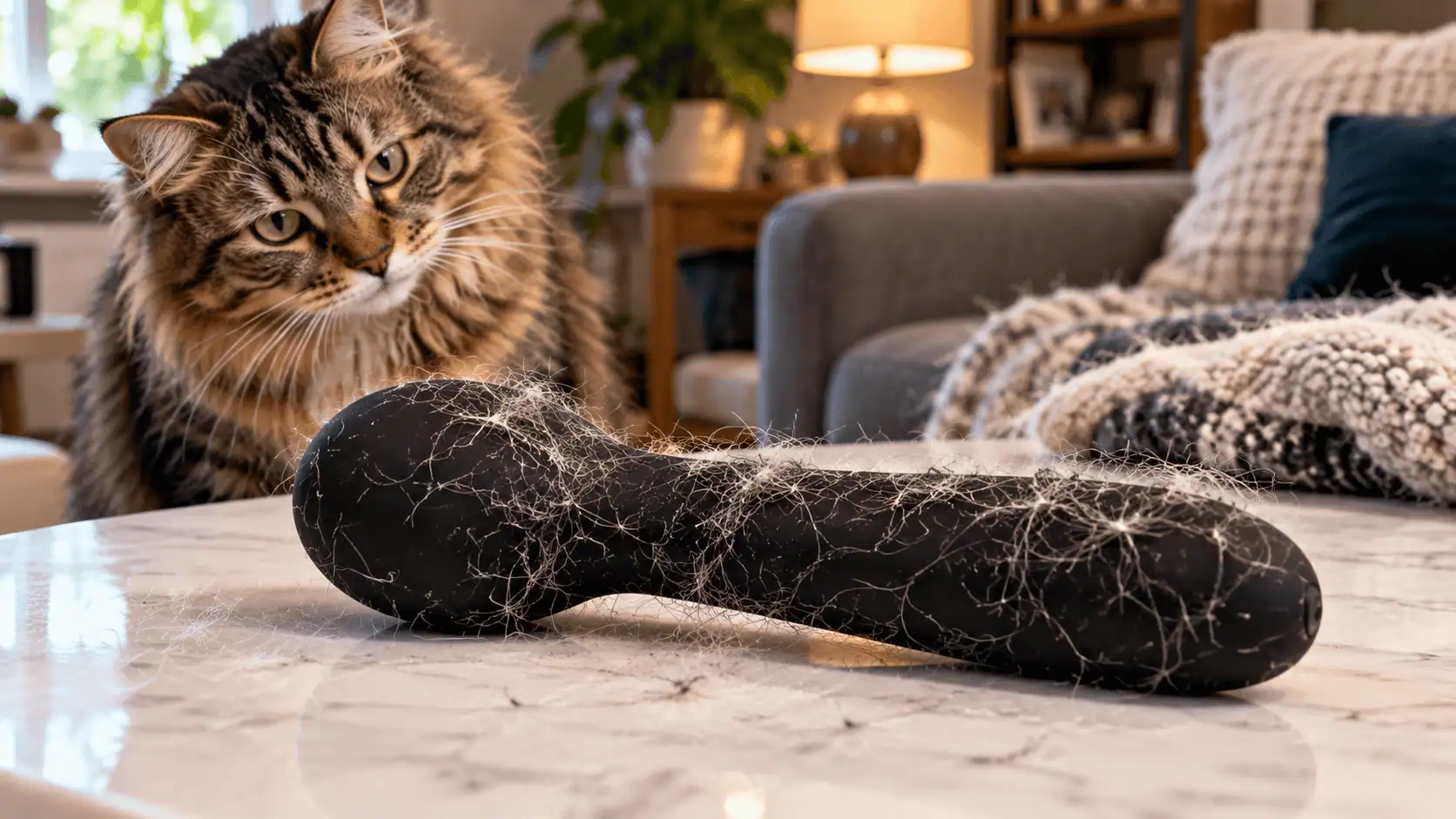
You wash your silicone vibrator, set it down for approximately twelve seconds, and somehow it has already acquired three pieces of lint, a strand of hair, and enough cat fur to suggest it briefly rolled across the living-room floor. So, why does silicone collect so much lint?
The short answer is that soft silicone sex toys have a naturally grippy surface. Tiny fibers, dust, hair, and other lightweight debris can make close contact with that surface and stay there instead of sliding or blowing away the way they might from glass, metal, or hard plastic. If you own silicone sex toys—or are thinking about buying one—that is useful to know, because lint on silicone often looks worse than it is. It does not automatically mean your toy is dirty, cheap, damaged, or secretly decomposing in your nightstand. In many cases, lint sticking to silicone is simply an annoying side effect of the same soft, velvety texture that makes silicone such a popular sex toy material.
The more important question is how to tell normal lint-magnet behavior from a silicone surface that has actually become sticky, gummy, or damaged. That is where cleaning habits, storage, residue buildup, and even a bit of static electricity come in, and understanding those factors helps you judge your toy’s condition, keep it hygienic, and make it last longer.
Silicone Is a Lint Magnet and Has a Lot More Grip Than Glass
Pick up a glass dildo and rub your hand across it. Smooth. Hard. Slippery. Now run your fingers across a soft silicone sex toy. Depending on the finish, you may notice a slight drag or velvety resistance against your skin.
Silicone is an elastomer, meaning it can be soft and flexible rather than rigid. Soft elastomer surfaces can create a relatively large area of contact with whatever touches them, which contributes to their familiar grip and friction. Research into silicone rubber friction has found that contact area plays an important role in how strongly these soft surfaces interact with other materials.
That is wonderful when you want a dildo that doesn’t feel like hard plastic. It is less wonderful when the thing making contact is a microscopic piece of your bath towel. Those little fibers get caught against the soft surface instead of falling right off.
Your Sex Toy Isn’t Actually Producing Lint
Silicone doesn’t manufacture fuzz. It is collecting whatever is already around it. That can include fibers from towels, sheets, blankets, clothing, storage bags, paper products, carpeting, and whatever mysterious debris permanently lives in the bottom of your bedside drawer.
Pet owners know exactly where this is going. Dog and cat hair seem capable of locating silicone from three rooms away. A toy can be freshly washed and completely sanitary and still look dirty because a handful of fibers have landed on the surface. That is one reason Jack and Jill Adult’s guide to how to store your sex toys recommends keeping toys inside bags, boxes, or other protected storage instead of tossing them loose into a drawer. Dust, crumbs, lint, and pet hair have far fewer opportunities to settle on the surface when the toy is covered.
Does Static Buildup or Static Electricity Make Silicone Attract Lint?
Sometimes static may contribute, but it is probably not the whole explanation. Silicone is an electrical insulator, and friction between materials can create electrostatic charge. Dry air and repeated rubbing against synthetic fabrics can make static effects more noticeable. That may help lightweight fibers move toward or remain on a silicone surface. However, you do not need static electricity to explain why your vibrator looks like a lint roller.
The physical grip of the soft surface already gives fibers plenty of reason to stay attached. Surface texture matters too. Research on silicone rubber has shown that surface roughness can affect charge accumulation and contact behavior. So the honest answer is that several physical effects may be involved.
Your vibrator is not generating some supernatural lint-attracting force field. It is just annoyingly good at holding onto tiny things.
Some Silicone Finishes Collect More Lint Than Others
Not every silicone sex toy feels exactly the same. Some have a silky, almost powdery finish. Others feel matte, velvety, slick, or slightly grippy. Silicone hardness can also vary dramatically. Those differences affect how much lint you notice.
A very smooth, firmer silicone surface may release fibers relatively easily. A softer matte finish can make individual hairs and pieces of fuzz much more obvious.
Color matters visually too. A white fiber on a black silicone dildo is going to announce itself. The same fiber on a pale pink toy might barely register.
None of that necessarily tells you anything about the quality of the silicone.
Jack and Jill Adult’s guide to common sex toy materials explains why silicone remains one of the most popular options despite its obsession with collecting whatever happens to be nearby. Quality silicone is nonporous, durable, available in a huge range of firmness levels, and relatively easy to clean.
A little fuzz is a small price to pay. Usually.
Is the Lint Issue on a Silicone Doldo Unsafe?
Not by itself. If a clean silicone toy picks up some lint while sitting on your bed, rinse the lint away before using it. Problem solved. The concern isn’t that a cotton fiber touched your dildo and permanently contaminated it. The problem is using a toy covered in visible debris without cleaning it.
Anything going inside or around sensitive body parts should be clean before use. If you’re ever unsure whether you cleaned the toy after your last session, wash it again. Our guide to cleaning and storing sex toys recommends warm water and an appropriate mild cleanser for many silicone toys, followed by thorough rinsing and air drying. Always check the manufacturer’s instructions, especially if the toy contains a motor, battery, charging port, or electronic controls. Silicone may love water. Your vibrator’s electronics might not.
The Towel Might Be the Problem
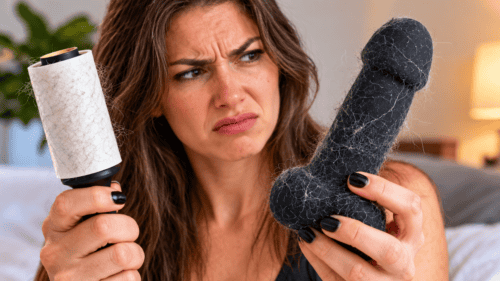
Here’s one of the easiest ways to cover a clean silicone toy in lint: Wash it perfectly. Then dry it with a fluffy bath towel. Congratulations. You have immediately undone the visual portion of your work. Towels shed tiny fibers, and silicone is excellent at catching them. Paper towels can do the same thing.
You dry the toy, look down, and suddenly it appears fuzzier than it did before you washed it. Air drying usually solves that problem. After rinsing the toy, place it somewhere clean and let it dry naturally.
If you need to wipe a toy, a clean cloth that doesn’t shed heavily is a better choice than the fluffiest towel you own.
Soap Residue Can Make the Problem Worse
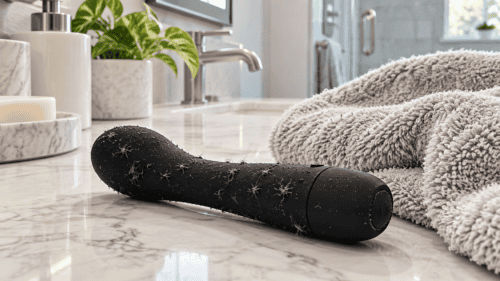
Sometimes silicone feels unusually grabby because something is sitting on its surface. Soap residue is a common offender. If you use too much liquid soap and don’t rinse thoroughly, a thin film may remain on the toy. Body oils, old lubricant, toy cleaner, lotions, or other products can create a similar effect.
That residue can make dust and fibers stick more noticeably. Give the toy a thorough rinse under warm running water if the product is waterproof. If it isn’t waterproof, clean it according to the manufacturer’s instructions without submerging electronic components.
Then let it dry completely and check the surface again. If it goes back to feeling like normal silicone, residue was probably the problem.
If it remains unusually sticky, keep investigating.
Normal Grippy Silicone Is Different From Sticky Silicone
This is probably the most important distinction in the entire article. Silicone can feel grippy. It should not suddenly feel like adhesive. A normal silicone toy might grab lint while still feeling smooth, dry, and consistent across the surface. A degrading or damaged surface may feel tacky, gummy, swollen, oily, unusually soft, peeling, or sticky even immediately after a proper wash.
How long sex toys last explains that changes in texture, smell, cracking, stickiness, or other material changes can signal that a toy is reaching the end of its usable life. If the toy suddenly collects dramatically more dirt than it used to and the surface itself feels different, don’t automatically blame lint. Look at the material.
Why Would Silicone Become Sticky?
Several things can alter a toy’s surface. One possibility is residue that was never completely removed. Another is contact with an incompatible product. Silicone lubricant is the obvious example. The compatibility of silicone-based lubricant with silicone toys depends on the exact formulations involved. Some combinations may be fine, while others can alter the toy’s surface.
That is why the safest general recommendation is to follow the toy manufacturer’s directions. Lube 101 guide explains the compatibility issue in more detail. Water-based lubricant is generally the easiest choice when you don’t know whether a particular silicone lube is compatible with your silicone toy.
Don’t assume that “silicone plus silicone always destroys toys.” But don’t assume it is always safe either. The manufacturer knows what was used to make the product.
Listen to them.
Does Cheap Silicone Collect More Lint?
Not necessarily. Lint attraction alone is a terrible quality test. A very expensive silicone vibrator can still emerge from its storage pouch wearing a magnificent coating of fuzz. Different finishes, hardness levels, textures, and manufacturing processes all influence how the surface feels. Some premium toys are intentionally incredibly soft and velvety. That softness may also make lint more noticeable.
If you’re judging quality, look at the whole product: material transparency, construction, seams, durability, odor, manufacturer reputation, electronics, warranty, and how the surface changes over time. Our first sex toy buying guide covers why material matters when choosing a toy rather than relying on price or appearance alone.
A fuzzy $150 vibrator isn’t necessarily defective. It may just need a rinse.
What About Micro-Porosity?
This is where internet explanations often go off the rails. You’ll sometimes see claims that silicone collects lint because it is covered in microscopic pores that trap fibers. That is misleading when discussing quality cured silicone sex toys.
Silicone is generally valued in this industry precisely because it is considered nonporous compared with materials such as jelly rubber, TPE, or TPR. Every manufactured surface has microscopic texture when examined closely enough. Surface roughness can certainly affect friction and how particles interact with a material. But describing a silicone sex toy as full of little pores makes it sound as though lint is getting absorbed deep inside the material.
That’s not what is happening. The fuzz you’re seeing is primarily sitting on the surface.
Rinse it off.
Should I Use Alcohol to Remove Lint?
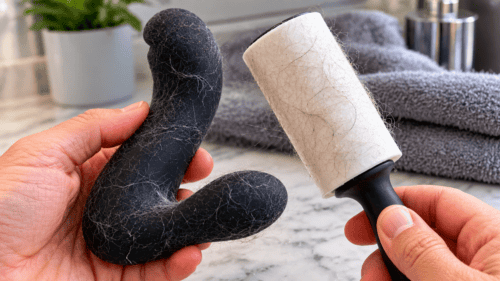
You shouldn’t need alcohol to remove lint in the first place. Water can usually handle that job. For ordinary cleaning, follow the care instructions supplied with the toy. Mild soap and warm water work for many silicone products, while specialized toy cleaners are another option. Repeatedly attacking a toy with strong solvents because you saw three hairs stuck to it is unnecessary.
Materials can react differently to chemicals; finishes, adhesives, and electronic components may also be involved, and manufacturers may give different cleaning instructions. Simple is usually better.
Clean it.
Rinse it.
Dry it.
Put it away properly.
Your vibrator does not need an industrial degreasing procedure after every orgasm.
A Damp Cloth Can Help With Loose Dust
If the toy is simply dusty rather than dirty from use, a damp lint-free cloth can help lift loose debris without generating the friction of aggressively rubbing a dry cloth across the surface. For waterproof toys, a quick rinse is often even easier. Watch textured areas. Ridges, seams, buttons, and charging areas can collect debris that a quick swipe misses.
If the toy has been sitting unused for weeks, give it a proper cleaning before use instead of assuming that removing the visible lint means the surface is ready for your body. Dust is what you can see. Cleaning deals with what you can’t.
Storage Makes a Huge Difference
The easiest way to deal with lint is to stop giving it access to your toy. Throwing a naked silicone dildo into a nightstand is essentially inviting every piece of dust and fuzz in the drawer to move in. Use the storage pouch if the toy came with one.
If it didn’t, a clean toy bag, dedicated box, or separate storage compartment can keep dust and debris away from the surface.
Protect toys instead of leaving them loose beside unrelated objects. It also keeps charging cords organized, prevents accidental damage, and saves you from discovering something questionable stuck to your vibrator exactly when you’re trying to use it.
Your orgasms deserve better organization.
Keep the Toy Away From Fuzzy Fabrics
Sometimes storage bags themselves are the lint source. A plush or heavily shedding fabric may protect the toy from dust while simultaneously depositing its own fibers onto the silicone. If that happens, use a smoother storage pouch or container.
The same applies to bedding. Setting a wet silicone toy on a fuzzy blanket is essentially breading it.
Likewise, putting one directly into the pocket of a robe or pajama pants is an excellent way to discover exactly how much invisible lint your clothing contains.
Let toys dry on a clean surface away from shedding fabrics.
Then cover them.
Pet Hair Changes the Rules
If you have pets, you already understand that hair is not governed by conventional physics. You can put a clean toy in a clean room that the cat hasn’t entered all day and somehow still find one hair attached to it. Silicone doesn’t stand a chance. Covered storage becomes especially useful in homes with cats and dogs. Don’t leave toys uncovered on beds, carpets, couches, or countertops where airborne hair and dust can land on them.
And if you discover one suspicious hair immediately before use, please do not stand there debating whether it is technically clean enough.
Rinse.
Does Color Affect Lint Attraction?
The color doesn’t necessarily make silicone attract more fibers.
It changes how obvious those fibers are. Black and dark-colored silicone tends to show pale dust, lint, skin flakes, and pet hair beautifully. Unfortunately. Lighter colors may hide some debris better, but that doesn’t mean it isn’t there.
Choose whatever color makes you happy. Just don’t mistake “I can’t see the lint” for “there is no lint.” The same rule applies to the rest of your house. We all know what happens when sunlight hits the room at exactly the wrong angle.
Does Lint Mean My Silicone Toy Is Dirty?
Maybe. But not necessarily. A few fibers on a clean toy mean fibers landed on a clean toy. A toy covered with dust because it spent six months loose under the bed is a different situation.
Use common sense. If the toy has been exposed to dust, pets, floors, dirty surfaces, body fluids, old lubricant, or questionable storage conditions, wash it properly before use. If you cleaned it five minutes ago and one piece of towel fuzz landed on it, remove the fuzz.
When Should I Worry About the Surface?
Lint itself is mostly annoying. Surface changes are what deserve your attention. Inspect the toy occasionally, particularly if you’ve owned it for years. Look for cracking, peeling, swelling, persistent stickiness, unusual discoloration, new odors, damaged seams, or areas where the material feels different from the rest of the toy. Electronic toys also need extra checks around charging ports, buttons, and where different materials meet.
When the surface itself starts changing, that’s more meaningful than whether it caught a piece of fuzz.

Your Silicone Toy Isn’t Broken Because It Looks Fuzzy
So, why does silicone collect so much lint?
Mostly because silicone sex toys tend to have soft, high-friction surfaces that give lightweight fibers, hair, and dust plenty of opportunity to stay attached. Surface texture, friction, static buildup, surrounding fabrics, residue, and storage conditions can all influence how dramatic the problem becomes.
The good news is that normal lint attraction is usually nothing to worry about. Rinse the toy before use. Use mild soap when appropriate. Rinse soap and lubricant residue thoroughly. Let it air dry instead of attacking it with a fluffy towel. Then store it somewhere clean and covered.
Look for a genuine change in the silicone itself. If a toy becomes sticky, gummy, swollen, cracked, peeling, or unusually smelly, it deserves a closer look and may need to be replaced.
But what if your perfectly good silicone vibrator simply collected lint thirty seconds after you washed it?
Welcome to owning silicone.
At least the same soft, grippy material that’s driving you crazy right now is probably one of the reasons you bought it in the first place.
And when you’re ready to add another lint magnet to the collection, Jack and Jill Adult carries silicone vibrators, dildos, anal toys, and other body-friendly adult novelties designed to feel considerably better against your body than they do against your bath towels.

I am a creative digital marketer and brand strategist with nearly two decades of hands-on experience helping businesses grow online. Based in Sugarloaf, California, I have worked across everything from rebranding retail stores to boosting e-commerce performance with smart SEO and a strong visual identity. My background is grounded in design, photography, and content marketing to build brands that actually connect with people. I am all about practical strategies, clean design, and ensuring the message matches the mission, on screen and in print.