Is Blue Balls Actually Real?
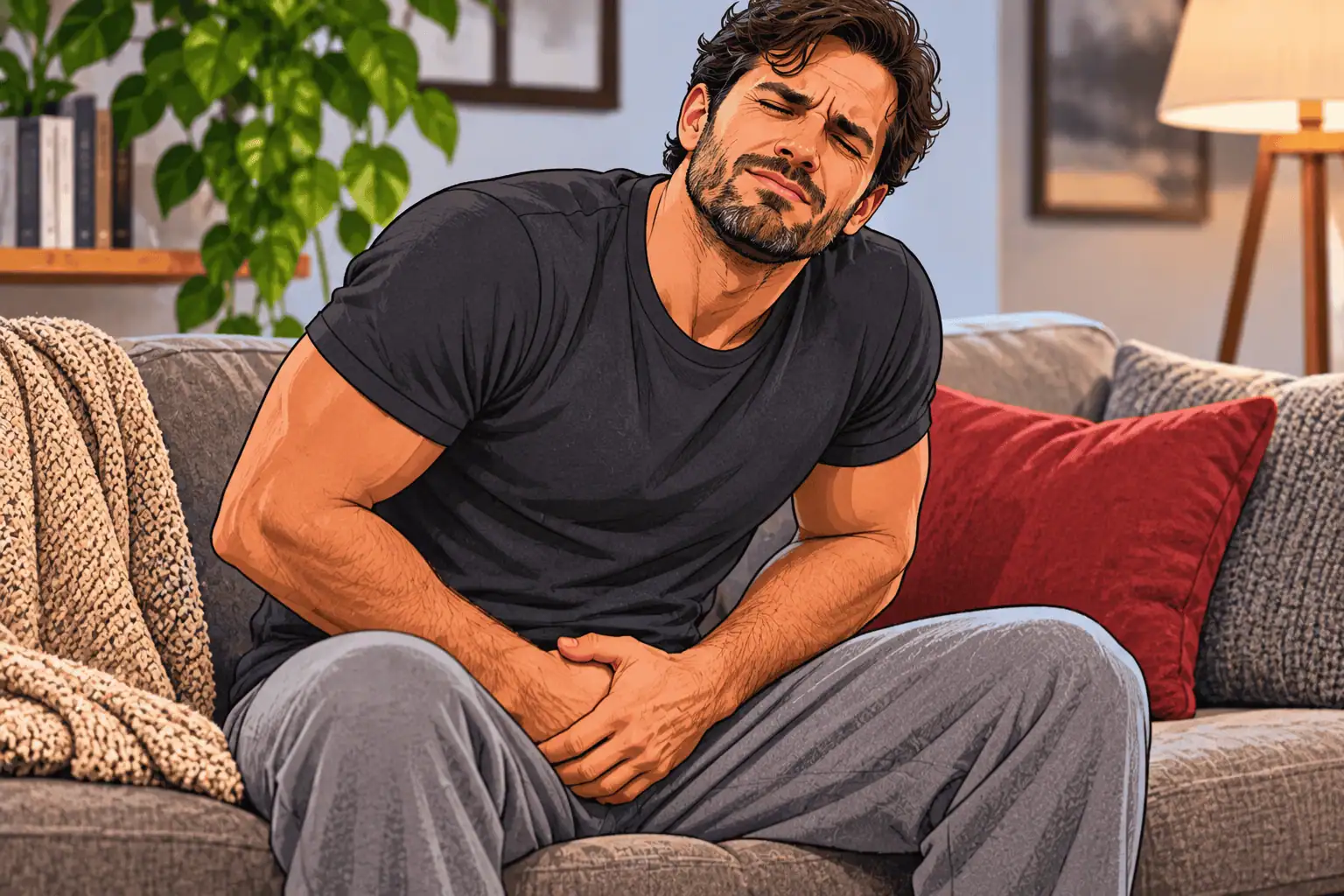
You have probably heard some version of the story: someone gets extremely turned on, does not orgasm, and then claims their balls are now suffering a medical crisis requiring immediate sexual assistance. There is a tiny piece of truth buried underneath all that drama. Blue balls can be real: a temporary, harmless ache, heaviness, pressure, or discomfort in the testicles after prolonged sexual arousal without orgasm or ejaculation, not a medical emergency.
If you are feeling that sensation yourself, wondering whether a partner’s claim is accurate, or just trying to get clear sexual health information, it helps to know what is actually happening and what is not. Healthcare professionals sometimes call the phenomenon epididymal hypertension, although it is not considered a formal medical diagnosis or dangerous condition.
What Exactly Are Blue Balls?
During sexual arousal, blood flow to the genitals increases. Blood fills erectile tissue in the penis and surrounding genital structures, while venous outflow temporarily slows so an erection can be maintained.
Normally, that increased genital congestion decreases after orgasm or after arousal fades. If someone remains highly aroused for an extended period without orgasm, the return to normal blood flow may happen more gradually.
One proposed explanation for blue balls is that this temporary congestion produces pressure, heaviness, or an aching sensation in the scrotum. Researchers are careful to describe this as a theory because surprisingly little research has directly examined the underlying physiology.
So yes, the sensation appears to be real for some people. The exact biological mechanism is much less settled than the slang term makes it sound.
What Do Blue Balls Feel Like?
Most descriptions involve a dull ache or mild pain rather than intense pain. People may describe heaviness, pressure, tenderness, fullness, or a vaguely uncomfortable sensation around the testicles and scrotum. The best available survey data support that description. In a 2023 survey study of 1,483 respondents with a penis, 56% said they had experienced testicular pain when approaching orgasm without ejaculating.
Among participants who described the intensity of that pain, about 58% called it mild and 36% called it moderate. Only about 7% described the pain as severe, which is important because truly severe testicular pain should not automatically be blamed on blue balls.
Blue balls can be annoying. They should not normally feel like somebody kicked you in the groin with a steel-toed boot.

Do the Testicles Actually Turn Blue?
Usually, no. The name most likely comes from the idea of venous congestion and deoxygenated blood remaining temporarily in engorged genital tissue. In theory, this may explain a faint bluish hue in some skin tones, but dramatic blue testicles are not a defining feature of the condition.
Cleveland Clinic specifically notes that blue balls refers primarily to pressure or discomfort associated with arousal without orgasm rather than balls literally changing color.
If the scrotum suddenly becomes severely discolored, swollen, or extremely painful, do not congratulate yourself on achieving advanced blue balls. Get medical attention.
Why Does Sexual Arousal Cause the Ache?
Sexual arousal temporarily changes circulation throughout the genital region. Sexual arousal causes increased blood flow to the genitals. Extra blood flows into erectile tissues, including the penis and structures surrounding the testicles, while veins are compressed to help maintain an erection.
After orgasm, genital blood flow and pressure generally return toward baseline relatively quickly as excess blood and pressure are released. Without orgasm, that process may take longer, and the blood stays in the area briefly, which may contribute to discomfort and is where the congestion explanation comes from.
In other words, we understand what happens during arousal reasonably well. We have much less research explaining exactly why one person gets an ache from prolonged arousal while another person feels absolutely nothing.
How Common Are Blue Balls?
Probably more common than the tiny amount of medical literature suggests, but we don’t have great population-level data.
The largest published survey on the subject included 2,621 people recruited online. Among respondents with a penis, 56% reported having experienced pain when approaching orgasm without ejaculation. That number should not be interpreted as “56% of all men get blue balls.” The participants were recruited through social media connected with the Science Vs podcast rather than through a nationally representative sample.
Still, the results show that the experience is not imaginary. Enough people report similar symptoms that dismissing the phenomenon completely does not make much sense.
Does Everyone With Testicles Get Blue Balls?
No. In the same survey, nearly 38% of respondents with a penis said they had never experienced the sensation. Another group said they always ejaculated during sexual activity and therefore had not encountered the situation being studied.
Even among people who did experience blue balls, most said it happened rarely or very rarely. Only a small percentage reported discomfort every time they became sexually aroused without ejaculating.
Bodies vary enormously in how they respond to arousal. One person’s genitals may complain loudly about an unfinished evening while another person’s simply clock out and go home.
How Long Do Blue Balls Last?
Usually not very long. Published discussions and clinical guidance generally describe the discomfort as resolving within minutes to a few hours as sexual arousal fades and genital blood flow returns to normal. Cleveland Clinic similarly describes blue balls as temporary and without lasting consequences.
There is no countdown where something terrible happens if you fail to ejaculate before the timer expires. Your body is perfectly capable of returning to baseline without orgasm.
If testicular pain continues for many hours, becomes worse, or persists when you are no longer aroused, stop assuming it is blue balls. Pain that lasts after arousal has passed may point to another cause and should be discussed with a primary care doctor.
How Do You Get Rid of Blue Balls?
The most obvious solution is orgasm. Masturbation can help relieve blue balls by allowing arousal to subside and genital blood flow to return toward normal. If you want an orgasm and have privacy, handling the situation yourself is perfectly reasonable. You do not require another person to cure blue balls. Your partner is not a prescription, so you should look to sex toys for men.
You Can Also Just Wait
Orgasm is not medically necessary. As arousal decreases naturally, blood flow changes and the discomfort typically fades by itself. Distracting yourself with something completely nonsexual may help the process along. Go make food, play a game, clean something, watch television, take the dog outside, or do whatever makes your brain stop concentrating on sexual stimulation. Once the erection and arousal subside, the ache should usually follow.
Your testicles may be disappointed. They will survive.
Does a Cold Shower Help?
Possibly, although the evidence is mostly practical rather than based on clinical trials. Cold water may decrease arousal and cause superficial blood vessels to constrict, which could make the sensation feel better. More importantly, standing under cold water tends to be extremely effective at redirecting your attention away from whatever had you turned on.
You do not specifically need a freezing shower, however. Anything that helps the sexual arousal fade can accomplish the same basic goal. So if a cold shower sounds miserable, you have other options. This is blue balls, not Navy SEAL training.
Can Exercise Help?
Light exercise may help some people by redirecting attention and increasing circulation throughout the body. Going for a walk, doing a few exercises, or otherwise moving around may help sexual arousal decrease. Again, there are not robust clinical trials comparing twenty squats with masturbation for blue-ball relief.
That would be a fantastic research paper, though. The important point is that you have plenty of ways to let the discomfort pass without involving another person’s body.
Blue Balls Are Not Sexually Dangerous
One of the persistent myths is that prolonged arousal without ejaculation somehow damages the testicles. There is no good evidence for that.
Blue balls are not associated with infertility, permanent testicular damage, erectile dysfunction, or some catastrophic buildup of semen. Your testicles are not going to explode because date night ended early. That part was always bullshit.
You Do Not Have to Ejaculate Every Time You Get Aroused
Sexual arousal does not create a biological debt that must be paid with orgasm. People become aroused constantly without ejaculating. Erections can happen during sleep, while flirting, while making out, while watching something erotic, or for seemingly no reason whatsoever.
The body eventually returns to its resting state. Sometimes that process produces temporary discomfort. That still does not mean orgasm is mandatory. This becomes especially important because blue balls have historically been used as an excuse for sexual coercion.
Blue Balls Are Never a Reason Someone Owes You Sex
This deserves its own section because the research is disturbing.
The 2023 survey specifically asked whether participants had ever felt pressured after refusing sexual advances because a partner was worried about experiencing blue balls or similar genital discomfort.
Among respondents with a vagina, 40.1% said yes. In other words, 40% of individuals with a vagina reported being pressured for sex due to blue balls. Only 3.7% of respondents with a penis reported similar pressure.
That is an enormous difference.
The researchers explicitly concluded that genital discomfort after arousal does not justify unwanted sexual activity, even when that pressure reflects a partner’s fear of pain. Nobody becomes responsible for providing oral sex, intercourse, a handjob, or any other sexual act because another person’s balls ache.
“But It Hurts” Still Does Not Change Consent
Pain can be real without creating entitlement.
If someone genuinely has genital pain after prolonged sexual arousal, we do not need to accuse them of inventing it. They may absolutely be uncomfortable.
They can masturbate; they can wait; they can distract themselves; they can take a shower; they can walk around until the sensation fades.
What they cannot do is convert their discomfort into someone else’s obligation.
A sexual partner is allowed to stop sexual activity at any point, whether the other person has blue balls, an erection, a perfectly timed playlist, or reservations at a hotel.
Consent does not become less important because somebody is horny and uncomfortable, and pain should never be used as leverage for sexual coercion.
Blue Balls and Sexual Frustration Are Different
People sometimes use “blue balls” to describe frustration rather than physical discomfort.
Those are not the same thing.
You can be frustrated because you expected sex and did not get it without experiencing testicular pain at all. Likewise, someone can experience an aching feeling after prolonged arousal without being emotionally frustrated or upset.
Separating the two matters because sexual frustration is sometimes dressed up as a medical problem.
“I really wanted to finish” and “I am experiencing genital discomfort” are both possible statements.
Neither means another person has to finish the job.
Can People With Vulvas Get Something Similar?
Apparently, yes—people with vulvas can experience a similar condition, often called blue vulva.
The same 2023 study included 1,138 respondents with a vagina, showing a similar response in female anatomy. About 42.1% reported vulvar or clitoral pain when approaching orgasm without reaching it.
The symptoms were generally milder than those reported by participants with penises. Among respondents with vaginas who rated the pain, about 84% called it mild, about 15% moderate, and only 1.4% severe.
Researchers and popular health sources sometimes call this blue vulva, although you may also encounter jokier terms like “blue bean” or “pink pelvis.”
Those are slang terms rather than medical diagnoses.
Why Would a Vulva Ache From Arousal?
The basic principle may be similar.
Sexual arousal increases blood flow throughout the genital region, not only to the penis and testicles. The clitoris, vulva, vaginal tissues, and surrounding structures become engorged as blood flow increases.
When arousal fades, that congestion resolves.
Some people may experience an aching, heavy, throbbing, or uncomfortable sensation while the tissue remains engorged, though that should be distinguished from other causes of genitopelvic pain.
Again, research into this specific phenomenon is extremely limited. The fact that people report it does not mean scientists have already fully mapped possible genitopelvic pain after arousal.
What Blue Balls Should Not Feel Like
Blue balls generally describes temporary scrotal pain or discomfort associated clearly with prolonged sexual arousal.
Sudden, severe testicular pain is different.
Testiculoscrotal pain can have many causes, and blue balls is, at most, a debated diagnostic consideration rather than a firm diagnosis.
Testicular torsion occurs when a testicle twists around the spermatic cord and compromises its own blood supply. It can cause sudden, intense pain and swelling and requires emergency medical treatment. Epididymal hypertension is distinct from medical conditions like testicular torsion and epididymitis.
That distinction is extremely important.
Do not sit at home waiting for supposed blue balls to disappear if you are experiencing severe testicular pain.
Testicular Torsion Is an Emergency
Testicular torsion is a medical emergency because the testicle twists and cuts off its blood supply.
Symptoms may include sudden severe pain in one testicle, swelling, abdominal pain, nausea or vomiting, or a testicle sitting higher than usual. Mayo Clinic advises you to get immediate medical help for sudden or severe testicular pain.
The Urology Care Foundation notes that outcomes are best when the blood supply is restored quickly, often within hours.
This is not something to self-diagnose based on an article.
If you are wondering whether the pain is severe enough to be an emergency, that alone is a good reason to get evaluated.
Other Conditions Can Cause Testicular Pain Too
Testicular torsion is not the only alternative explanation.
Epididymitis, infections, inguinal hernias, kidney stones, varicoceles, injuries, urinary tract problems, and several other conditions can cause pain that radiates into or originates in the testicles. Mayo Clinic lists a wide range of possible causes of testicular pain.
Blue balls should therefore make sense in context.
If you were highly aroused for a prolonged period, did not orgasm, and developed a mild bilateral ache that fades as arousal decreases, blue balls is plausible. Epididymitis is inflammation of the epididymis, a coiled tube behind each testicle where sperm matures, and it is not the same thing as epididymal hypertension or urgent problems like testicular torsion.
If the pain suddenly appears out of nowhere, affects one side intensely, comes with swelling, nausea, fever, urinary symptoms, a lump, or does not go away, do not assume you diagnosed yourself correctly.
When Should You Get Medical Help?
Seek immediate medical help for sudden or severe testicular pain, especially if it is accompanied by swelling, nausea, vomiting, abdominal pain, fever, or abnormal positioning of a testicle.
Medical guidance also recommends evaluation when testicular pain persists instead of resolving, or when there is a new lump, swelling, or change in the testicle, though pain after arousal that fades and has no other symptoms may still be harmless.
Blue balls should improve as arousal disappears.
Pain that refuses to leave the party deserves a closer look.
So, Are Blue Balls Actually Real?
Yes — blue balls real discomfort can happen after prolonged sexual arousal without orgasm, but probably not in the way somebody’s horny boyfriend explained it in high school.
Some people experience temporary aching, heaviness, pressure, or discomfort in their testicles after prolonged sexual arousal without orgasm. Research suggests the experience is fairly common among the people who have been surveyed, although the exact physiology is still not well studied.
The discomfort is usually mild, infrequent, temporary, and harmless, and it more often means short-lived scrotal pain than a dangerous medical problem. It can resolve with orgasm, masturbation, reduced arousal, distraction, or simply waiting for the body to return to normal.
People with vulvas can apparently experience something similar after prolonged arousal without orgasm, and limited literature has also reported comparable symptoms in young adults.
The part that absolutely is not real is the idea that blue balls creates a sexual emergency requiring somebody else’s participation. Your discomfort never turns another person’s body into treatment.
If you want sexual relief, masturbation exists.
If the pain is sudden, severe, persistent, or accompanied by swelling or nausea, medical care exists.
And if somebody tells you they will medically suffer unless you have sex with them, they have just confused blue balls with bullshit.
Jack and Jill Adult believes better sexual health starts with accurate information, enthusiastic consent, and understanding how bodies actually work. If you want sexual relief, masturbation and sex toys are perfectly valid options, and our adult store carries strokers, vibrators, lubricants, and other pleasure products that let you take care of your own needs without turning anyone else into the solution.

I am a creative digital marketer and brand strategist with nearly two decades of hands-on experience helping businesses grow online. Based in Sugarloaf, California, I have worked across everything from rebranding retail stores to boosting e-commerce performance with smart SEO and a strong visual identity. My background is grounded in design, photography, and content marketing to build brands that actually connect with people. I am all about practical strategies, clean design, and ensuring the message matches the mission, on screen and in print.