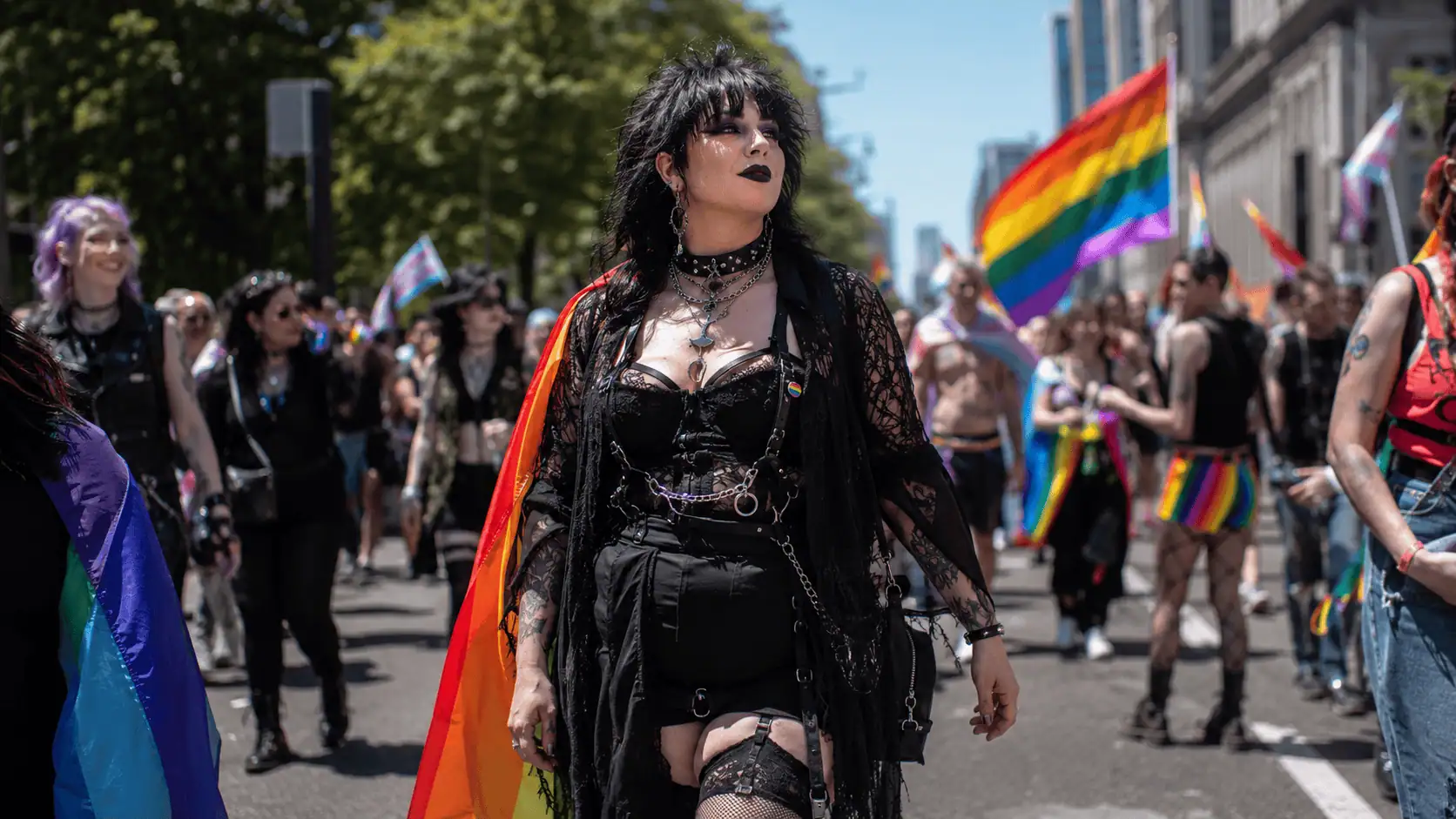
Pride For The Outcasts
Pride For The Outcasts is for everyone who never felt normal enough for the normal world or polished enough for mainstream Pride.
It is for the queer goths in black lipstick, the kinksters who learned early that desire does not always arrive in a neat little box, and the introverts who love the community but hate crowds. It is also for the late bloomers, soft-spoken freaks, leather people, horror fans, and anyone who still deserves love without becoming easier to explain.
Pride Month is usually sold in bright colors, loud pop music, rainbow merch, and crowded city events. However, that version of pride can feel unfamiliar when your own celebration looks darker, quieter, stranger, or more private.
Not everyone celebrates Pride by dancing in the street. Some people celebrate by finally saying, “This is who I am, and I am done apologizing for it.”
Pride For The Outcasts Starts With Being Different
Pride For The outcast is not just a cute phrase. Weird Pride Day is actually a thing, separate from Pride Month! Celebrated on March 4th, its message is simple: embrace the parts of yourself that other people tried to make you hide.
That concept fits Pride Month perfectly. After all, Pride has always been more than a party. Pride events are celebration, protest, community, survival, and refusal all at once.
They create space for people whose lives have been treated like a threat, a joke, a bad influence, or something to be controlled.
That is why outcasts pride matters.
Being different can feel isolating when the world keeps asking you to become easier to explain. However, when people gather around shared weirdness, isolation can turn into belonging.
You are not the only one. You were never the only one.
Outcasts Pride Is Still Pride
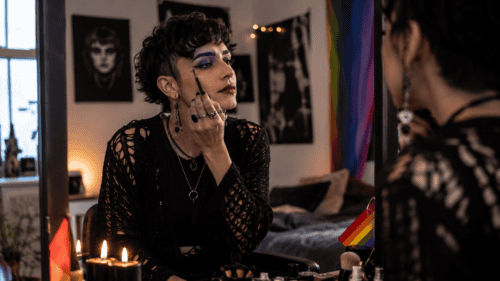
Mainstream Pride culture can be powerful, but not everyone sees themselves in the glossy version of Pride Month. West Hollywood hosts one of the largest annual LGBTQ+ Pride celebrations in the world, and the WeHo Pride Parade fills Santa Monica Boulevard with color, performance, community, politics, and visibility every June. You can learn more through the official WeHo Pride site.
That kind of celebration matters. Still, some people do not feel like rainbow tank tops and pop music tell the whole story. Some people are more black lace than glitter. Others are more of a cemetery picnic than a rooftop brunch. Plenty are more basement shows than corporate parade floats.
That does not make their pride less real.
Pride belongs to the outcasts, too. It belongs to the quiet person watching from home, the person who is out online but not at work, and the person who is still questioning.
It also belongs to the person who tried to pass as “normal” for years and finally got exhausted.
There are many ways to be seen. Some are loud. Others are private, messy, strange, or still becoming.
Queer Goths, Kinksters and Outcasts Pride Culture
Queer culture and goth culture have always had a lot in common.
Both understand what it means to be stared at. Both play with beauty, darkness, fashion, gender, performance, and refusal. In many ways, both know that being called “too much” can eventually become a sign that you are finally close to yourself.
Too dark. Too dramatic. Too sexual. Too soft. Too masculine. Too feminine. Too intense. Too strange.
Eventually, the insult starts to lose power.
That is the beauty of being different. It gives you language for the parts of yourself that never fit the default setting.
Maybe you like black boots, heavy eyeliner, and moody music. Maybe you are drawn to bondage, role play, power exchange, or sensory play. Or maybe your fantasies have always been strange, theatrical, or impossible to explain to someone who thinks pleasure should only look one way.
That does not make your desire bad. It makes it yours.
Pride For The Outcasts Needs Boundaries Too
Pride For The Outcasts does not mean “anything goes,” especially when kink, trust, and fantasy are involved. For readers who connect with darker play, restraints, control, and power exchange, the bondage and BDSM collection is a natural place to explore with care, consent, and curiosity.
Real self-expression still needs respect, consent, and boundaries. Being different is not a free pass to ignore another person’s comfort.
Kink, queer identity, goth culture, and alt sexuality all work best when people can talk honestly about what feels good, what feels unsafe, and what needs to stop. It is the reason people can explore without harm.
Boundaries help turn fantasy into something grounded. They make it easier to acknowledge desire without letting it run over someone else.
They also help people feel safer when exploring new things, especially if shame, rejection, abuse, or past relationships made pleasure feel complicated.
So talk first. Check in. Agree on limits. Keep care close. Most importantly, maintain enough trust that no one feels trapped inside someone else’s idea of fun.
Pleasure Does Not Need A Perfect Label
Some people know exactly who they are. Others do not. Both count.
Pride Month can sometimes create pressure to have the perfect label, the perfect story, the perfect coming-out post, and the perfect explanation for everyone watching. However, real life is not always that clean.
Sexuality can be fluid. Human desire can be confusing. Attraction can surprise you.
A person can spend years thinking they know what they want, then one day find a door they never noticed before.
That does not mean they were lying before. Instead, it means people change, learn, accept new parts of themselves, and sometimes find language that fits better.
Sometimes, they even stop needing every feeling to come with a sign, label, or public comment.
Pleasure can be part of that learning process. For some people, solo exploration is where the question begins. For others, it is where the answer finally feels safe enough to appear.
Pride For The Outcasts Includes Solo Pleasure
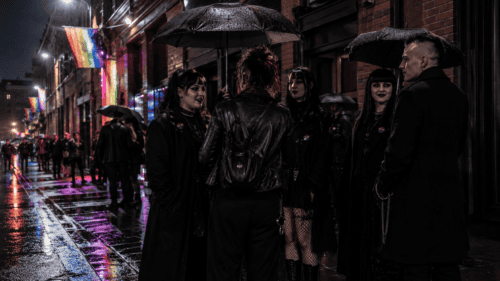
Pride For The Outcasts is not only about couples, kissing, parades, nightlife, and public celebration. Not everyone has a partner. Not everyone wants one. Some people are healing after divorce, recovering from bad relationships, staying private, or figuring out what their body wants now.
Others are disabled, introverted, grieving, anxious, or just tired of giving their body to people who never handled it with care. That does not make their pride smaller.
Solo pleasure can be a way to come home to yourself. It lets you explore without performing. In addition, it gives you control over time, touch, fantasy, and pace.
More importantly, it can help you feel like your body is still yours.
That is especially meaningful for outcasts who spent years being told their body, style, desire, or identity was too much.
Build A Pride Toy Drawer That Feels Like You
A toy drawer does not need to follow gender rules.
It does not need to look like a magazine ad. It does not need to prove anything about your identity either.
Instead, it only needs to make sense for your body, your curiosity, and your life.
Some people want vibration. Others want pressure, fullness, restraint, texture, or sensation. Meanwhile, some want strap-ons, plugs, strokers, wands, lingerie, massage oil, or toys that make them feel powerful in their skin.
The point is not to buy what a label says you should want.
The point is to find options that feel honest.
That is the fun part of pride. You get to build your own map.
Pride For The Outcasts Means Community Without Performance
Pride For The outcast is also about finding transgender sex toys and people who do not make you shrink. For couples or partners exploring together, the couples toys collection can support communication, play, and closeness without forcing anyone into a boring role.
Finding community is crucial when you have spent years feeling different. That is one reason Pride matters.
It can turn private shame into public belonging. It can also help people find friends, partners, chosen family, artists, performers, activists, and strangers who make life feel less lonely.
The ballroom scene of the 1970s and 80s did this in a powerful way. It created safer spaces for marginalized people to celebrate identity, fashion, performance, family, and self-expression when the outside world gave them very little room.
Community does not have to look one way. It might be a parade, a drag show, a goth night, a queer book club, a kink workshop, a private group chat, an art festival, or one person who finally says, “I get it.”
You do not have to become louder to deserve belonging. You just have to find people who do not make you shrink.
Outcasts Pride Month Without Rainbow Washing
Pride Month can get weird in a bad way too.
Every June, brands suddenly discover rainbow logos, limited-edition collections, and soft-focus messages about love. Some of that support is real. However, some of it feels like a sales app with glitter on it.
People notice.
Pride is not just a color palette. It is history, protest, culture, sex, politics, risk, art, grief, joy, and survival.
It is people fighting to live openly in a country and a world that has not always wanted them safe.
So yes, celebrate. Buy the quirky t-shirt. Wear the rainbow pin. Put on the black lipstick. Go to the city event. Stay home and read.
Share the post. Join the community. Create the look. Build the collection. Find your people.
Just do not let Pride Month become another box you have to fit inside.
The message is not “be an outcast in a way that is easy to market.” The message is “your uniqueness is not a problem to solve.”
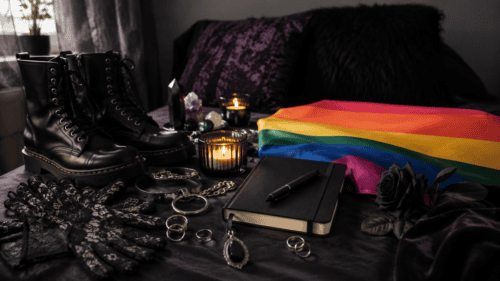
Pride For The Outcasts Is A Refusal
It refuses to apologize for black clothes in June. It refuses to make desire sound cleaner than it is. It is also refusing to pretend all queer life looks like a parade float.
Most of all, it is refusing to let other people define what kind of love, body, fantasy, or sexuality is acceptable.
It is also a celebration.
A celebration of the goths, kinksters, misfits, introverts, late bloomers, punks, leather lovers, horror fans, soft boys, hard femmes, gender rebels, awkward flirts, lonely romantics, and everyone still trying to find their place.
Being different is not a flaw. It is evidence that you survived the pressure to become someone easier.
So celebrate Pride Month your way. Go loud or stay quiet. Wear color or wear black. Dance in public or close the curtains.
Explore with a partner or explore alone. Ask questions. Accept what you find. Then create a life that does not require you to pass as someone else.
When you are ready, Jack and Jill Adult has toys, lube, lingerie, BDSM gear, couples products, and private shopping options for people whose pleasure does not fit inside a clean little box.
Pride belongs to the outcasts.
It always has.

I am a creative digital marketer and brand strategist with nearly two decades of hands-on experience helping businesses grow online. Based in Sugarloaf, California, I have worked across everything from rebranding retail stores to boosting e-commerce performance with smart SEO and a strong visual identity. My background is grounded in design, photography, and content marketing to build brands that actually connect with people. I am all about practical strategies, clean design, and ensuring the message matches the mission, on screen and in print.