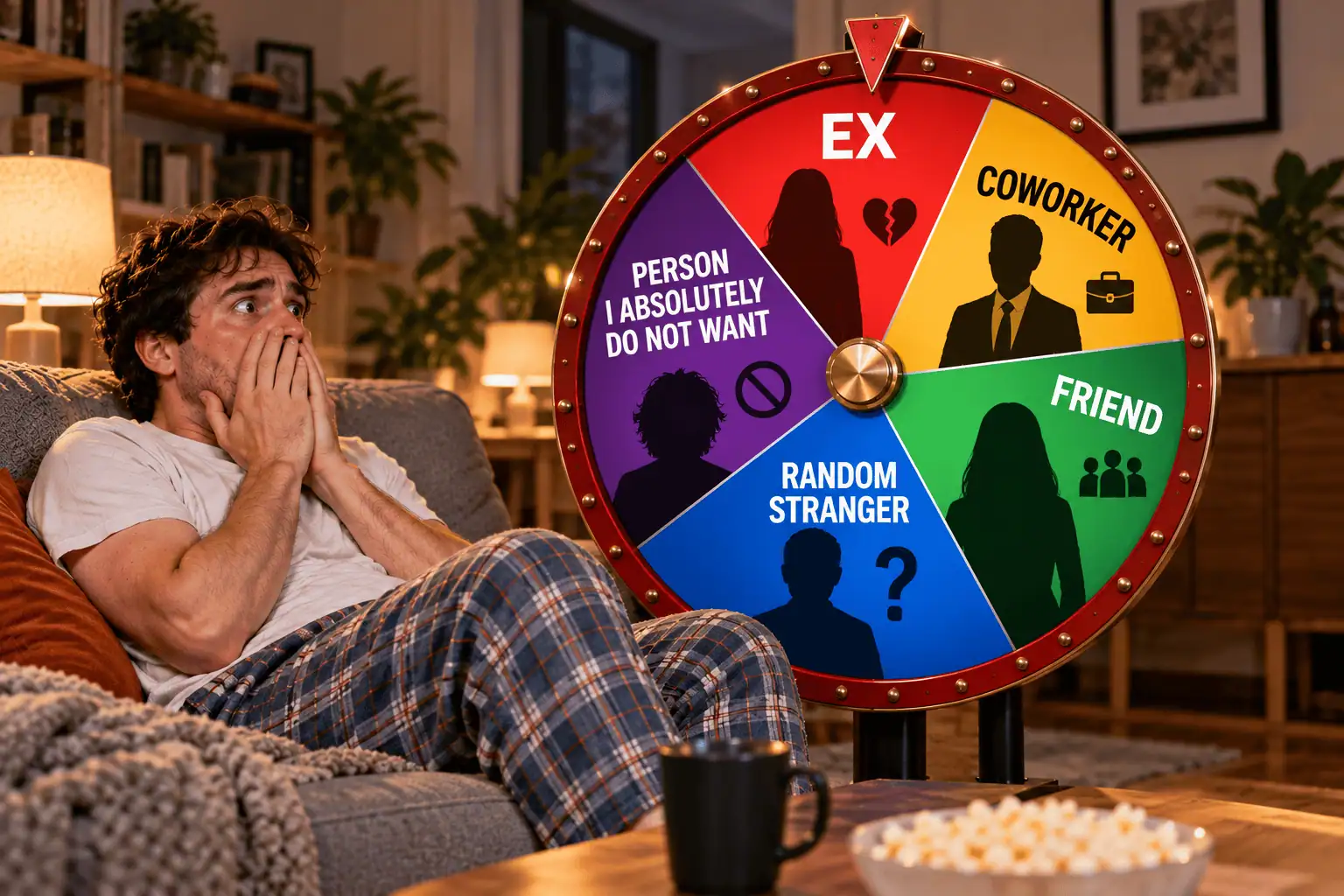
Unwanted Sexual Fantasies
Your brain drops someone into a sexual fantasy, and your immediate reaction is, “Wait. Why them?” Maybe it is a friend you have never found attractive. Maybe it is an ex you absolutely don’t want back. It could be a coworker, a stranger, or someone whose personality irritates you in real life. Sometimes the scenario itself feels completely unlike anything you would actually choose during sex.
These are often unwanted sexual fantasies: sexual thoughts or scenarios your mind creates involuntarily, involving people or situations you would not choose or desire in real life. That can create an uncomfortable question. If you fantasize about someone or something, doesn’t that mean part of you secretly wants it?
Not necessarily.
Sexual fantasies are products of imagination, memory, arousal, curiosity, emotion, and association. Your mind can create sexual thoughts without issuing a request for you to turn them into sexual activity. In other words, fantasy and desire overlap, but they are not identical.
Fantasy Isn’t a To-Do List
One of the biggest misconceptions about sexual fantasies is that every fantasy reveals a hidden desire. Sometimes it does. You might fantasize about trying bondage because bondage genuinely interests you. You may imagine sex with someone because you are attracted to them.
Other fantasies are much less literal.
Your brain can take a person, situation, body part, memory, or completely random idea and drop it into an erotic story. The fact that it created sexual arousal does not automatically mean you would enjoy the same situation in real life.
Experimenting with Sexual Fantasies explores how fantasy gives people a private space to play with scenarios without committing to doing them. A fantasy can stay a fantasy forever. You don’t need to test it.
Why Would I Fantasize About Someone I Don’t Want?
Brains are association machines. You see someone during the day. They appear in a dream that night. You remember an old conversation while masturbating. A character in a movie reminds you of somebody you know. Suddenly that person has wandered into a sexual fantasy without submitting an application.
That does not prove secret attraction. Sexual thoughts can borrow familiar faces simply because those faces are available. Your mind is constantly combining memories, emotions, images, and ideas. Sexual imagination uses the same raw material. Sometimes the person is almost irrelevant. What matters is what they represent inside the fantasy.
Perhaps they seem confident. Maybe they represent authority, attention, danger, novelty, affection, validation, or something forbidden. Your brain may be interested in the dynamic rather than the actual person. You might never want to touch them in real life.

Sexual Arousal Is Not Always Logical
Arousal doesn’t run a background check before showing up. People can become aroused by ideas they find ridiculous, embarrassing, impractical, or completely incompatible with their everyday personality. That is part of what makes sexuality interesting.
You might enjoy being in control during your actual sex life while fantasizing about surrendering control. Someone who values monogamy might occasionally imagine sex with strangers. A shy person may fantasize about being watched. None of those automatically represent a contradiction.
Jack and Jill Adult’s Horny Brain takes a deeper look at the weird connections between arousal, fantasy, fetishes, and the things our brains decide are sexy.
Sexual imagination does not have to follow your normal rules because nothing is actually happening. That freedom is part of the appeal.
Taboo Can Make a Fantasy More Intense
Sometimes a fantasy gets its power precisely because you would not do it. The human brain pays attention to novelty, danger, prohibition, and surprise. Something that feels forbidden can create a stronger emotional response than something familiar.
That doesn’t mean you secretly want to violate your values. The distance between fantasy and reality can actually make certain thoughts feel safer to explore mentally. In your head, there are no logistical problems, awkward conversations, consequences, or real people whose boundaries you have to consider.
Real sexual behavior always requires consent and respect for the people involved. Fantasy does not require anyone else to participate.
That difference lets your imagination explore ideas that would be unwanted, unrealistic, or completely off-limits in real life.
Thinking About Someone Doesn’t Mean You Want Them
This becomes particularly confusing when the fantasy involves someone you know. Maybe you fantasize about a close friend. Does that mean you secretly want to destroy the friendship and jump into bed together?
No.
It could reveal some attraction. It could also reflect emotional closeness, curiosity, familiarity, admiration, or absolutely nothing significant at all. The same applies to fantasies about an ex. Your brain has an enormous library of sexual memories. Someone who played an important role in your sexual history may occasionally appear even when you have no desire to restart the relationship.
A remembered sexual experience can still be arousing after the relationship itself has become completely undesirable.
Why Sexual Preferences Change explains how attraction, fantasies, interests, and sexual preferences can shift throughout life. What once interested you may stop working, while something unexpected can suddenly enter the picture.
Sexuality moves around.
It does not always ask permission first.
What If I Fantasize About Someone Else During Sex?
This question creates a lot of unnecessary guilt. People sometimes fantasize about another person while masturbating or having sex with a partner. That alone does not mean the relationship is failing. Fantasy can add novelty to a familiar sexual experience. Your brain may briefly create a different person, location, role, or scenario because imagination increases arousal. Many people do this without wanting another relationship or planning to cheat.
We have previously explored what women fantasize about during sex, including fantasies involving partners, strangers, different situations, and being desired by other people.
What matters more is the larger pattern. If you occasionally imagine something different, that is one thing. If you can no longer feel sexual interest in your partner without mentally replacing them every time, there may be relationship or arousal issues worth examining.
Context matters much more than one passing fantasy.
Why Do Certain Thoughts Keep Coming Back?
Repeated fantasies can happen for many reasons. Sometimes you simply found an idea especially arousing. Your brain remembers what worked and returns to it during masturbation or sex. Novelty can become familiarity surprisingly quickly.
Repeated thoughts can also become more noticeable because you are monitoring them. Once you decide a particular thought is disturbing, you may start checking whether it is happening again. That attention can make the thought feel much bigger.
There is an old mental trick that demonstrates the problem: tell yourself not to think about something, and suddenly it becomes difficult to think about anything else. Trying desperately to eliminate a thought can sometimes make you more aware of it. That does not mean you enjoy it. It means your attention is locked onto it.
Fantasy and Intrusive Thoughts Aren’t Always the Same
A sexual fantasy is generally something your imagination engages with because some element feels interesting, exciting, curious, or sexually stimulating, unlike intrusive sexual thoughts that feel unwanted and alarming. An intrusive sexual thought may feel completely different.
Intrusive thoughts can arrive unexpectedly and cause fear, disgust, shame, anxiety, or distress. The person may desperately want the thought to disappear. Most people experience odd or unwanted mental content at times, but these thoughts become a problem when they are sticky and distressing.
The International OCD Foundation explains that people with sexual obsessions related to OCD may experience intrusive thoughts involving deeply upsetting or taboo subjects. These thoughts can involve family members, inappropriate sexual behavior, sexual violence, sexual orientation fears, or other topics the person finds horrifying.
Crucially, people experiencing these OCD-related thoughts are often terrified that having the thought means something about who they are. It doesn’t work that simply.
Thoughts are mental events. Such thoughts do not establish desire or intent. A disturbing thought does not automatically establish desire, intent, sexual orientation, character, or future behavior.
What Is Sexual OCD?
Obsessive-compulsive disorder can involve far more than the stereotypical hand washing or checking locks.
OCD involves recurring obsessions plus compulsive behaviors or mental actions used to reduce distress, and these symptoms can consume time and cause significant distress. Sexual content can become the focus of those obsessions. Approximately 24% of people with OCD experience sexual obsessions.
Someone experiencing sexual OCD may repeatedly question what an intrusive thought means.
“What if I secretly want this?”
“What if this means something about my sexual orientation?”
“What if I’m a bad person?”
“What if I lose control?”
They may begin checking their body for signs of arousal, reviewing memories, searching the internet for reassurance, avoiding certain people, analyzing every sexual response, or performing mental rituals because they feel anxious and want to prove the feared interpretation is not true.
Those behaviors can temporarily reduce anxiety. Unfortunately, they can also keep the obsessive cycle going. People often feel ashamed by these obsessions, which can delay seeking help.
The International OCD Foundation notes that sexual obsessions can produce intense shame and guilt precisely because the thoughts often conflict with the person’s values. The organization also describes exposure and response prevention, commonly called ERP, as generally considered a first-line psychological treatment for OCD.

Arousal Doesn’t Always Provide an Answer
One of the cruelest parts of anxiety around unwanted sexual thoughts is the urge to inspect your body’s response. A person may think, “Did my body react? If it did, that must mean I liked the thought.” Human bodies are not reliable lie detectors. Repeatedly checking for bodily reactions often creates more negative thoughts and uncertainty instead of clarity.
Attention itself can create physical awareness. Anxiety can produce sensations throughout the body. Constantly checking whether your genitals responded keeps your attention focused on exactly that area. Then the person checks again. And again.
This is one reason repeatedly testing yourself rarely provides the certainty people hope to find. Sexual response involves the brain, body, attention, emotions, hormones, context, and countless other factors. One physical sensation cannot explain your identity or intentions.
When Fantasy Creates Shame
Sex carries an enormous amount of cultural baggage. People learn early that certain sexual desires are acceptable and others are embarrassing. Family expectations, religion, social norms, gender roles, relationship expectations, and previous experiences can all influence what someone believes they are allowed to think. Then the imagination produces something unexpected. Shame arrives almost immediately.
You may start treating a private fantasy like evidence in a criminal trial against your personality. That reaction can give the fantasy far more importance than it deserves.
Let’s Talk About Sex looks at how sexual shame and silence can make honest conversations about desire far harder than they need to be. Being curious about your own sexuality does not require approving of every thought your brain generates.
Sometimes the healthiest response is simply noticing it.
“That was weird.”
Then moving on.
Do Fantasies Reveal Sexual Orientation?
Not reliably. People sometimes experience fantasies that do not match their usual pattern of romantic or sexual attraction. That can be interesting, confusing, exciting, distressing, or completely unimportant.
One fantasy does not diagnose a sexual orientation. Orientation is generally understood through broader and more persistent patterns of attraction, identity, romantic interest, and sexual interest. Sexual fantasy can be part of that picture, but it is not a single-question personality test.
Someone may also fantasize about a gender they have never dated without deciding they need a new label immediately. Curiosity exists. Imagination exists. Sexuality can also evolve.
If a fantasy leads you to understand something meaningful about yourself, that’s fine. If it doesn’t, you do not need to force it into a larger explanation.
What About Compulsive Sexual Behavior?
Compulsive sexual behavior is another concept that frequently gets mixed into discussions about sexual thoughts.
Having a lot of fantasies does not automatically mean you have compulsive sexual behavior disorder. It is also distinct from OCD, though both can involve unwanted sexual thoughts and other mental health conditions.
Neither does masturbating regularly, enjoying pornography, having a high sex drive, or thinking about sex frequently.
The concern is loss of control and significant negative consequences.
Someone may repeatedly engage in sexual behaviors despite serious harm to relationships, work, finances, or other areas of life. Some clinicians discuss this alongside other behavioral addictions, while still treating it as a separate issue rather than the same thing. They may feel unable to control repetitive sexual urges or behaviors even when they genuinely want to stop.
That is very different from occasionally thinking about your coworker naked and wondering why your brain chose violence that morning.
Labels matter because pathologizing ordinary sexuality can create unnecessary shame.
Pornography Use Can Complicate Things
Pornography can become another source of confusion. Watching porn may introduce scenarios, body types, power dynamics, or sexual activities you had never considered. Sometimes those ideas later appear in fantasies. Again, that does not necessarily mean you want to recreate everything you watched.
Porn is entertainment built around sexual stimulation. Your brain can respond to the novelty or intensity of an image without turning it into a real-world goal. Problems are more likely when pornography use feels compulsive, interferes with relationships or responsibilities, or becomes the only reliable path to arousal.
If you notice that ordinary sexual experiences feel flat compared with increasingly intense content, Jack and Jill Adult’s Why Nothing Turns You On Anymore explores how novelty, repetition, stress, stimulation, and expectations can affect arousal.
Using pornography and having sexual fantasies are not mental disorders by themselves.
Should You Tell Your Partner?
Not every thought needs a press conference. You are allowed to have a private imagination. Partners do not automatically need a complete transcript of every sexual thought you’ve ever experienced. However, sharing fantasies can be fun when the thought represents something you genuinely want to explore together. Talking openly about sexual interests can also build trust when both people feel safe discussing them.
The decision becomes more personal when the fantasy involves someone your partner knows. Before sharing, ask what you hope the conversation accomplishes. If you want to explore the theme, you may not need to identify the person at all.
For example, “I’ve been fantasizing about being seduced by someone I shouldn’t want” communicates the erotic element without announcing that your brain cast their best friend in the role.
Experimenting with fantasies offers practical ways to discuss fantasies without turning the conversation into an interrogation.
When Should You Seek Professional Help?
Most sexual fantasies do not require treatment.
Unexpected thoughts are part of being human. However, professional help may be worthwhile if sexual thoughts cause persistent anxiety, severe shame, major distress, avoidance, depression, relationship problems, or repetitive behaviors that feel impossible to control.
The same applies if you spend large amounts of time seeking reassurance about what your thoughts mean. Someone experiencing OCD may benefit from mental health professionals who understand OCD rather than a therapist who simply tries to interpret every intrusive thought as a hidden desire.
Cognitive behavioral therapy and exposure and response prevention are established approaches for OCD. Acceptance and Commitment Therapy is another evidence-based option, and these approaches can help people build healthier coping strategies in response to unwanted thoughts.
Medications such as SSRIs can also be part of effective treatment for sexual OCD.
If you are concerned about compulsive sexual behavior, look for a qualified mental health professional who understands sexual health and can distinguish a high libido from behavior that is genuinely causing impairment.
Getting help does not mean the thought was secretly meaningful. Sometimes the problem isn’t the thought. It is the anxiety cycle built around it.

Your Imagination Isn’t Your Character
Sexual fantasies can be strange. They can feature people you dislike, people you would never date, situations you would never attempt, and versions of yourself that barely resemble who you are outside your imagination. Most of the time, that is simply what imagination does.
A fantasy can represent genuine desire, but it can also represent novelty, curiosity, symbolism, memory, taboo, emotional needs, or random mental noise. You do not need to treat every sexual thought as a confession. The line that matters most is between imagination and behavior.
Real sexual activity requires consent, respect, boundaries, and willing adults. Fantasy can wander almost anywhere because nobody else is actually involved. If your fantasies are enjoyable, you can explore them privately or use them as inspiration for consensual play. If they are unwanted and distressing, you do not have to wrestle with them alone.
If your imagination reveals something you genuinely want to explore, Jack and Jill Adult can help you find toys, accessories, and ideas that turn your choices into safe, consensual real-life pleasure.

I am a creative digital marketer and brand strategist with nearly two decades of hands-on experience helping businesses grow online. Based in Sugarloaf, California, I have worked across everything from rebranding retail stores to boosting e-commerce performance with smart SEO and a strong visual identity. My background is grounded in design, photography, and content marketing to build brands that actually connect with people. I am all about practical strategies, clean design, and ensuring the message matches the mission, on screen and in print.