Why Do My Ears Ring After Orgasm?
You have an orgasm, everything feels great, and then suddenly there is a high-pitched eeeeeeee in one or both ears. That can be confusing, especially if it happens more than once. If you’ve ever wondered why do my ears ring after orgasm, the honest answer is that there is not much direct research on this exact experience, but there are several reasonable explanations involving temporary changes in blood pressure, heart rate, muscle tension, breathing, and sensory perception.
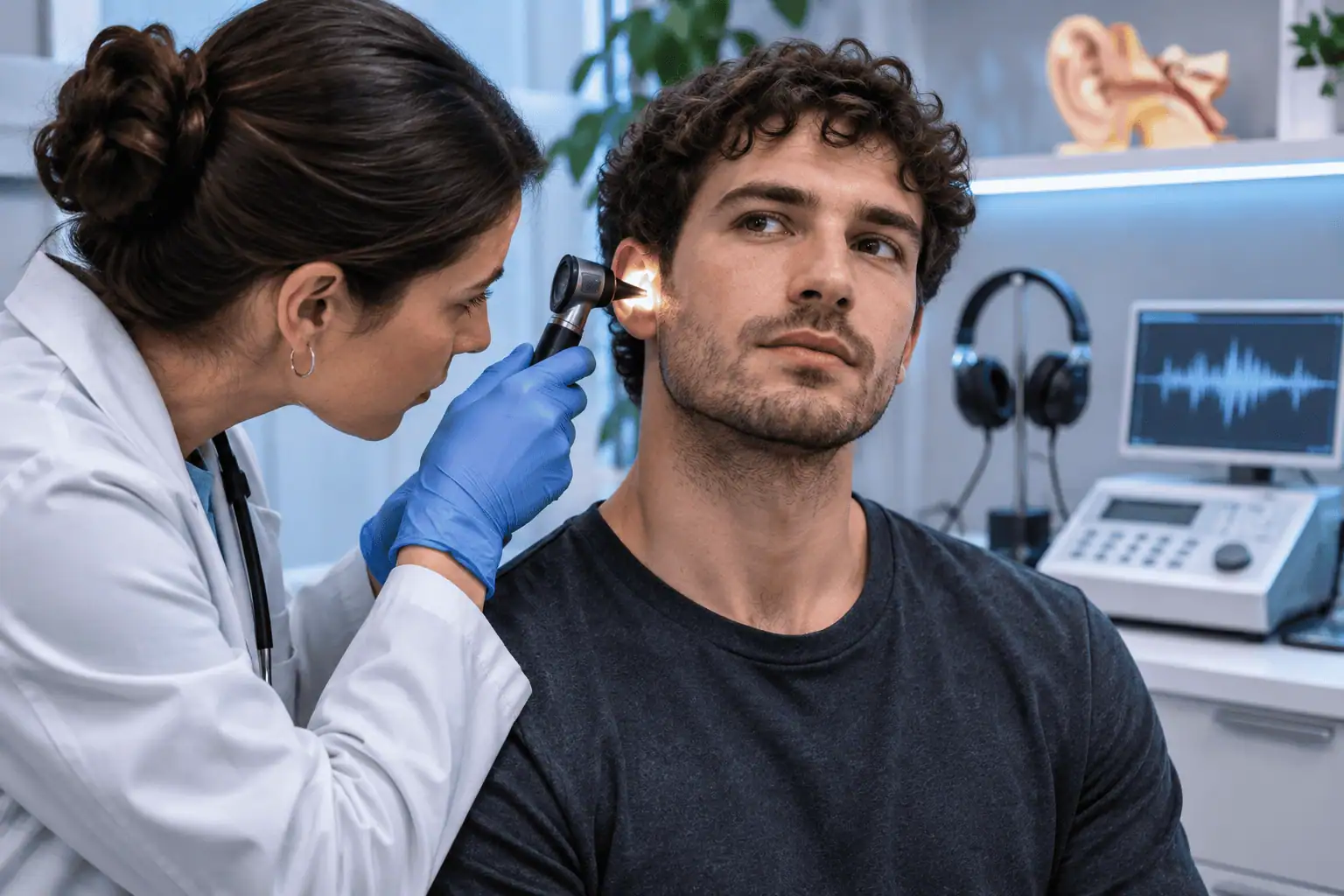
The ringing itself is called tinnitus, which simply means hearing a sound without an outside source creating it. Tinnitus can sound like ringing, buzzing, humming, hissing, roaring, clicking, or even a pulsing sound that seems synchronized with your heartbeat.
For many people, an occasional brief episode may be nothing more than a temporary sensory quirk. If it keeps happening, lasts, affects hearing, or comes with other symptoms, though, it is worth paying attention.
Orgasm Changes Your Cardiovascular System
Orgasm is not just a genital event. Your heart rate rises, blood pressure changes, breathing speeds up, muscles contract, and the autonomic nervous system shifts rapidly during sexual arousal and climax. Studies monitoring healthy adults during sexual activity have found modest temporary increases in heart rate and blood pressure that return toward baseline shortly after orgasm.
That does not prove those changes directly cause tinnitus. It does give us one plausible reason your auditory system may temporarily feel different during or immediately after orgasm.
The inner ear depends on an extremely delicate blood supply. Even small changes in circulation can affect how the hearing system functions, which is one reason vascular problems can sometimes produce tinnitus.
Blood Pressure Changes May Make Ringing More Noticeable
Sexual arousal increases cardiovascular activity.
In healthy people, those changes are usually brief and well tolerated. One study found that heart rate peaked around orgasm and returned toward baseline within about 10 to 20 minutes, while blood pressure also returned relatively quickly. If you already have mild tinnitus, those temporary changes may simply make it easier to notice.
Think about what happens after intense exercise. Your heartbeat feels louder, your breathing changes, and you become more aware of sensations you normally ignore. Orgasm can produce a smaller version of that whole-body shift.
Pulsatile Tinnitus Is Different
If the sound is more like whoosh-whoosh-whoosh in time with your heartbeat, that is called pulsatile tinnitus.
Pulsatile tinnitus deserves more attention than ordinary brief ringing because it can sometimes be connected to blood vessels, blood flow, or cardiovascular conditions. ENT Health specifically recommends medical evaluation for tinnitus that sounds like your pulse or heartbeat.
That does not mean every heartbeat-like sound after sex is dangerous. It does mean recurrent pulsatile tinnitus should not simply be written off as “orgasm ears.”
If you can reliably match the sound to your pulse, mention that specifically to a healthcare professional.

Your Ears Are Finely Tuned Pressure Systems
The ear has multiple compartments. The outer ear collects sound, the middle ear contains the eardrum and tiny hearing bones, and the inner ear contains the cochlea and balance structures. Pressure in the middle ear is regulated through the Eustachian tube, which connects the middle ear to the back of the throat. Changes in breathing, swallowing, jaw movement, congestion, or pressure can temporarily change how your ears feel.
During sex, people often hold their breath, breathe irregularly, clench their jaw, tense their neck, or strain.
All of those things can change the way pressure feels in or around the ears, even if the inner ear itself is perfectly healthy.
Holding Your Breath Can Affect Pressure
A lot of people unconsciously hold their breath during intense sexual stimulation. Others perform something similar to a Valsalva maneuver, where you strain while holding air against a closed throat. That temporarily changes pressure in the chest, head, and vascular system.
You may recognize the same sensation when lifting something heavy or straining on the toilet. That does not automatically cause tinnitus, but it can temporarily change ear pressure or make an existing ringing sound more noticeable. If you notice ringing mainly after very intense orgasms where you are holding your breath or straining, that pattern may be worth paying attention to.
Your Neck and Jaw May Be Involved
Not all tinnitus originates entirely inside the ear. Muscular tension in the jaw and neck can aggravate tinnitus in some people. ENT Health specifically notes that temporomandibular joint problems and muscular stress or fatigue can contribute to or worsen tinnitus. Sex can involve a surprising amount of muscle tension.
Your jaw clenches, your shoulders tighten, your neck arches. Your whole body contracts. Then everything relaxes.
If your tinnitus responds to muscular tension, that rapid shift could potentially make it more noticeable.
The Brain Is Part of Hearing Too
We tend to think of hearing as something happening exclusively in the ears. It is not. Your ears detect sound, but your brain interprets it.
The auditory cortex and other neural networks determine what gets noticed, ignored, amplified, or interpreted as meaningful.
Orgasm produces a dramatic short-term change in brain activity and attention. Your focus becomes extremely narrow during climax, then rapidly shifts afterward as the nervous system moves into the resolution phase.
It is plausible that this change in sensory attention could make subtle internal sounds suddenly more noticeable. That is very different from saying orgasm damages the auditory cortex. There is no good evidence for that.
Orgasm Does Not Appear to Flood the Brain With Blood
One tempting explanation is that orgasm causes a huge surge of blood into the brain and somehow makes the ears ring. The evidence does not really support that simplified story.
A study measuring blood velocity in the middle cerebral artery during intercourse found that heart rate increased substantially during orgasm, while cerebral artery blood velocity did not significantly increase. So the cardiovascular explanation is more complicated than “more blood hits your head.”
Orgasm changes circulation and autonomic activity, but that does not mean the entire brain suddenly experiences a giant vascular rush.
Hormones Probably Aren’t the Simple Answer Either
Studies of orgasm do show changes in certain hormones and neurotransmitters. Prolactin, catecholamines, heart rate, and blood pressure have all been measured around orgasm, but research has not established that oxytocin makes the inner ear more sensitive or that dopamine directly causes temporary post-orgasm tinnitus.
That does not mean neurochemistry plays no role.
It means we should not invent a tidy chemical explanation just because it sounds scientific.
Sexual physiology is complicated enough without turning every symptom into “dopamine did it.”
Tinnitus May Simply Be More Noticeable After Sex
Tinnitus can exist below the level of conscious awareness. Your brain is very good at filtering repetitive sensory information until something draws attention to it. After orgasm, the room may suddenly become quiet. Your breathing slows. Movement stops. You are lying still.
That creates a perfect environment to notice a faint sound that may have been present the entire time. It is the same reason tinnitus can seem much louder at night when the house becomes quiet. The tinnitus may not actually have increased dramatically. Your awareness of it may have.
Loud Music Can Be the Real Culprit
Sometimes sex gets blamed for something the speakers did. If you have loud music playing during sex, especially through headphones or speakers close to the bed, temporary ringing afterward could simply be noise-related tinnitus.
Loud sound can damage the delicate sensory cells of the inner ear, and repeated exposure can contribute to hearing loss and tinnitus.
If your ears ring after concerts, clubs, power tools, or loud headphones too, orgasm may be a coincidence rather than the true trigger.
Hearing protection matters even if the activity producing the soundtrack is more interesting than mowing the lawn.
Could It Be Temporary Hearing Loss?
Occasional ear fullness or altered hearing after orgasm may feel like temporary hearing loss. That does not mean you should assume it is harmless. Sudden sensorineural hearing loss is an actual medical emergency, particularly when hearing drops suddenly in one ear. ENT Health recommends prompt evaluation and a hearing test when someone experiences sudden hearing loss, especially with tinnitus, dizziness, or ear pressure.
This is one place where the article needs to draw a hard line. Brief ringing by itself is one thing. Suddenly realizing one ear sounds muffled or significantly quieter is another.
Sudden Hearing Loss Needs Prompt Attention
If you suddenly lose hearing in one ear, do not wait a week to see whether sex somehow caused it. Sudden sensorineural hearing loss can occur over a period of hours or a few days and is often accompanied by tinnitus, pressure, dizziness, or a feeling that the ear needs to pop.
Treatment tends to work best when started quickly. That means sudden hearing loss plus ringing deserves prompt medical assessment. Do not assume it is simply a strange orgasm side effect.
What About Ménière’s Disease?
Ménière’s disease is an inner-ear disorder that can cause tinnitus, hearing changes, pressure or fullness in the ear, and episodes of vertigo. Sex does not cause Ménière’s disease. However, someone who already has an inner-ear condition may notice symptoms more strongly during situations that involve stress, exertion, changes in circulation, or sensory overload.
If your ringing after orgasm comes with spinning vertigo, fluctuating hearing, or recurring ear fullness, that is worth discussing with an ENT specialist. The issue may be bigger than the sexual trigger.

What About Acoustic Neuroma?
An acoustic neuroma, also called a vestibular schwannoma, is a benign tumor involving the nerve connecting the inner ear and brain. It is uncommon. Persistent one-sided tinnitus or asymmetric hearing loss can sometimes be associated with conditions such as vestibular schwannoma, which is why ENT specialists take unilateral symptoms seriously.
That does not mean ringing after orgasm is evidence of a tumor. Please do not Google yourself into a panic. It means persistent, one-sided symptoms deserve evaluation rather than endless guessing.
Can Stress Make It Worse?
Absolutely. Stress and anxiety can make tinnitus more noticeable because they change attention, muscle tension, sleep, and emotional response to sound. ENT guidance specifically lists stress and muscular fatigue among factors that can aggravate tinnitus. That is relevant to sex because some people approach orgasm while extremely tense.
If your entire body is clenched and your brain is hyper-focused on performance, you may notice every little physical sensation afterward.
Our article on how stress and anxiety affect your sex life looks at how stress can change everything from arousal to physical sensation.
Your ears are apparently invited to that party too.
Sexual Arousal Already Changes Heart Rate and Breathing
Arousal itself produces physical changes before orgasm ever happens. Your heart rate increases, breathing changes, muscles tense, genital blood flow rises, and your nervous system shifts into a more activated state. Our guide to how to get aroused explains how physical arousal and mental desire can involve overlapping but distinct processes.
That matters here because the ringing may begin during the buildup rather than exactly at climax. If you start noticing it before orgasm, that clue can help you and a healthcare professional think about whether cardiovascular exertion, pressure, breathing, or another factor is involved.
Paying attention to timing is useful.
Anxiety Can Also Make You Hyperaware of It
Once you notice ringing after orgasm one time, something annoying can happen. You start waiting for it the next time. Then you orgasm and immediately check your ears. “Is it happening?” That kind of monitoring can make a subtle sound seem much louder.
It is similar to what happens with orgasm anxiety, where focusing intensely on whether something is working can interfere with the entire experience. Jack and Jill Adult’s guide to understanding orgasm anxiety explores how attention and performance pressure can hijack sexual pleasure.
Tinnitus can be influenced by attention too. The harder you listen for it, the easier it may become to hear.
Relaxation Can Help If the Ringing Is Mild
If the ringing is brief, familiar, and not accompanied by hearing loss or other symptoms, relaxing may help it fade into the background. Slow your breathing. Unclench your jaw. Relax your shoulders. Drink some water. Let your heart rate settle. A little background sound can also make tinnitus less intrusive. NHS guidance recommends avoiding total silence and using soft music or other sounds if tinnitus is bothering you. You do not need to panic over every ten-second ear squeal. You do need to pay attention if the pattern changes.
When Should You See a Doctor?
Make an appointment if the tinnitus becomes persistent, recurrent, bothersome, or clearly different from what you normally experience. Persistent one-sided tinnitus, hearing changes, recurrent dizziness, or tinnitus that disrupts sleep or daily life are all reasons to seek evaluation. ENT specialists may recommend a hearing test depending on your symptoms.
A healthcare professional can also check for simpler causes such as earwax buildup or ear infection. Not every weird ear symptom requires an MRI. Sometimes your ear is just full of wax.

So Why Do My Ears Ring After Orgasm?
There is no single proven explanation. Orgasm temporarily changes heart rate, blood pressure, breathing, muscle tension, autonomic activity, and sensory attention, and any combination of those changes could make tinnitus briefly appear or make existing tinnitus more noticeable. Jaw and neck tension may contribute, breath-holding may contribute, and a suddenly quiet room afterward may make subtle ringing easier to hear. If you had loud music playing during sex, that may be the real culprit instead.
Sometimes the timing may also reveal an underlying ear or hearing problem that deserves attention. What we cannot confidently say is that orgasm releases a specific hormone that directly makes the inner ear ring, that post-orgasm tinnitus always lasts five to ten minutes, or that everyone experiencing it has the same mechanism.
If the ringing is brief and disappears, it may simply be one of your body’s stranger responses to sexual activity. If it keeps happening, becomes one-sided, sounds like your heartbeat, comes with dizziness, or affects your hearing, get it checked by a healthcare professional.
Sex toys can also make orgasms more intense or easier to reach, which means some people may first notice odd post-orgasm sensations while using a vibrator, wand, suction toy, or another favorite. That does not mean the toy caused the ringing; it may simply mean the orgasm was stronger, longer, or physically more intense than usual.
If you’re exploring what kinds of stimulation work best for your body, Jack and Jill Adult carries a full range of sex toys: vibrators, wand massagers, clitoral stimulators, strokers, couples toys, and other pleasure products for every kind of sex life. Sexual response involves your whole body, not just your genitals, and apparently sometimes your ears decide they want to participate too.

I am a creative digital marketer and brand strategist with nearly two decades of hands-on experience helping businesses grow online. Based in Sugarloaf, California, I have worked across everything from rebranding retail stores to boosting e-commerce performance with smart SEO and a strong visual identity. My background is grounded in design, photography, and content marketing to build brands that actually connect with people. I am all about practical strategies, clean design, and ensuring the message matches the mission, on screen and in print.